
Ever tried cutting plywood with the wrong saw blade? It’s a frustrating experience! You end up with jagged edges, splintered wood, and a project that looks less than perfect. Choosing the right circular saw blade for plywood isn’t just about making a cut; it’s about achieving a clean, smooth finish that makes your projects shine.
Many woodworkers, from beginners to those with a bit more experience, often find themselves confused by the sheer variety of blades available. What do all those numbers mean? How many teeth are too many? This uncertainty can lead to wasted money on blades that don’t perform well and, worse, a lot of wasted effort trying to fix imperfect cuts. You want a blade that slices through plywood like butter, leaving behind a crisp, clean edge every time.
This post is here to clear up all that confusion. We’ll break down exactly what you need to look for in a circular saw blade for plywood. By the end, you’ll have the knowledge to pick the perfect blade for your next project, saving you time, frustration, and ensuring your woodworking dreams come true with beautiful, smooth cuts.
Top Circular Saw Blade For Plywood Recommendations

- MAINTAIN CUTS: Fully-hardened plate to help maintain true cuts
- PRECISION: Precision-ground teeth for smooth, accurate cuts
- EXTENDED LIFE: Heavy-gauge high carbon steel extend life
- ACCURATE CUTS: Fully flattened plate for fast, accurate cuts

- Precision-ground circular saw teeth for smooth, accurate cuts
- Fully-hardened circular saw blade plate runs truer, longer
- Heavy-gauge, high-carbon steel construction provides extended circular saw blade life
- 140 teeth count with top/face grind
- 7-1/4" blade length with 5/8" diamond arbor and 0.08" kerf

- For crosscuts. Excellent cut with perfect finish on two-sided melamine, wood and plywood
- For cutting lumber, plywood and OBS sheets. To be used on portable and cordless circular saws
- Technical details: kerf thickness 0.069, plate thickness 0.043, 5-Degree cutting angle, grind 10-Degree
- Super-thin kerf to reduce material waste. Shear angle design to produce smooth cuts, reduce cutting force and improves the cutting speed
- Special Carbide to prevent blade from any material failure. Non-Stick Orange Shield Coating reduces pitch build-up and protects against corrosion

- 130 Teeth and Thin kerf offer precision ground teeth for smooth clean cuts
- Tougher alloy steel blades can stays sharper longer
- Ideal for Plywood, OSB, Paneling and Vinyl Siding smooth and fast cutting
- No more splinters cut smooth miter edges and cross cuts in plywood paneling composition board and veneers
- 5/8 Inch(16mm) Arbor with 5/8"-1/2" and 5/8"-3/8" Bushing compatiable all cord and cordless popular saws
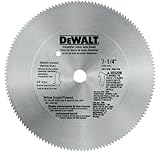
- The product is 7-1/4"140t plywood blade
- Easy to use
- The product is manufactured in China

- 5-1/2 Inch 130T Circular Saw Blade 5/8 Inch (16mm) Arbor with 1/2" and 3/8" Bushing - 3 Pack
- Fast and smooth cutting plywood, OSB, Plastic, Paneling and Vinyl Siding Saw Blades
- No more splinters cut smooth miter edges and cross cuts in plywood paneling composition board and veneers
- Made of high-quality steel for extended life, Ideal for DIYers or remodelers.
- Circular saw blade that features precision ground teeth for smooth and accurate cuts each time it is used.

- 6-1/2 inch circular saw blade 140 teeth with 5/8 inch Arbor diamond knockout and 0.08" kerf - 3 Pack
- Fast and smooth cutting Plywood, OSB, Plastic, Paneling and Vinyl Siding Saw Blades
- No more splinters cut smooth miter edges and cross cuts in plywood paneling composition board and veneers
- Made of high-quality steel for extended life, Ideal for DIYers or remodelers.
- Expansion slots work to reduce heat build-up and eliminate warping.
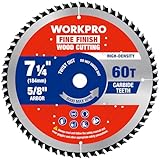
- W124876AE|7.25" 60T 1PC: Fine finish 60T blade for plywood and trim; laser-cut slots minimize vibration and ensure accurate cuts.
- Premium Carbide Tipped for Long Life: High-density Tungsten Carbide tips (TCT) provide superior hardness and wear resistance. Laser-cut expansion slots reduce vibration and noise, ensuring accurate and smooth cuts on wood, plywood, trim, and laminates.
- Thin Kerf Design for Efficient Cutting:Ultra-thin kerf (1.2–1.8mm depending on size) reduces load on your saw, minimizing material waste. Cuts faster with less effort while maintaining precision.
- Versatile Tooth Options for Every Job: Choose the perfect blade for your project: Low-T (18T/24T) for fast ripping & framing, Mid-T (40T) for general-purpose crosscutting, and High-T (60T/80T) for fine & ultra-fine finish on plywood, trim, and cabinetry.
- Wide Compatibility & Precision Fit: Available in standard arbor sizes: 3/8", 10mm, and 5/8". Designed to fit most major circular saw brands, including DeWalt, Makita, Milwaukee, and more. Always confirm your saw’s arbor size before ordering.
Choosing the Best Circular Saw Blade for Plywood
Cutting plywood can be tricky. You want smooth, clean edges, not jagged ones that look like a beaver chewed them. The right circular saw blade makes all the difference. This guide helps you pick the perfect blade so your projects look professional.
Key Features to Look For
When you’re shopping for a plywood blade, a few things are super important.
Tooth Count
- More teeth: Blades with more teeth, like 60 or 80 teeth, are best for plywood. They make smaller cuts with each pass. This means a smoother finish.
- Fewer teeth: Blades with fewer teeth are better for rougher cuts or thicker wood. They remove material faster but leave a rougher edge on plywood.
Blade Diameter and Arbor Size
- Diameter: Most circular saws use 7 1/4-inch blades. Make sure the blade you buy matches your saw.
- Arbor size: This is the hole in the center of the blade. It needs to fit the shaft (arbor) on your saw. Most are 5/8 inch.
Tooth Shape
- ATB (Alternate Top Bevel): This is the most common tooth shape. Every other tooth is angled. This helps the blade cut cleanly.
- Hi-ATB (High Alternate Top Bevel): These teeth have a steeper bevel. They offer an even smoother cut, which is great for plywood.
- FTG (Flat Top Grind): These are for rougher cuts. They are not ideal for plywood.
Important Materials
The material of the blade and its teeth affects how well it cuts and how long it lasts.
- Blade Body: Most blades have a steel body. Look for blades made from high-quality steel. This steel is strong and resists bending.
- Carbide Tipped Teeth: The teeth are usually made of carbide. Carbide is very hard. It stays sharp longer and cuts through tough materials like plywood easily.
Factors That Improve or Reduce Quality
Some things make a blade cut better, and some make it worse.
What Makes a Blade Better
- Thin Kerf: A thin kerf blade has a narrower cutting path. This means it removes less material. It makes cutting easier and generates less waste. This is good for your saw and your wood.
- Anti-Vibration Slots: Some blades have slots cut into them. These slots help reduce vibration. Less vibration means a smoother cut and a quieter saw.
- Coating: Some blades have special coatings. These coatings reduce friction and heat. This helps the blade stay sharp and cut more smoothly.
What Makes a Blade Worse
- Dull Teeth: Dull teeth tear the wood. They make rough cuts and can even burn the plywood. Always use a sharp blade.
- Wrong Tooth Count: Using a blade with too few teeth for plywood will result in splintering.
- Low-Quality Carbide: Not all carbide is the same. Lower quality carbide dulls faster.
User Experience and Use Cases
How a blade performs in your hands matters. You want a blade that makes your work easier.
- Smooth Cuts: The best blades give you clean edges. This means you spend less time sanding. You can use these blades for furniture making, cabinet building, or any project where appearance is important.
- Reduced Tear-Out: Tear-out happens when wood fibers are pulled out. A good plywood blade minimizes this.
- Ease of Use: A blade that cuts smoothly and doesn’t bind up makes your job safer and more enjoyable. You won’t have to fight the saw as much.
- Durability: A quality blade will last a long time. You won’t need to replace it often. This saves you money in the long run.
Frequently Asked Questions (FAQ)
Q: What is the best tooth count for cutting plywood?
A: For plywood, aim for blades with 60 to 80 teeth. More teeth mean cleaner, smoother cuts.
Q: Can I use a regular wood blade for plywood?
A: You can, but it might not give you the best results. A blade designed for plywood will give you much smoother edges and less splintering.
Q: What does “kerf” mean on a saw blade?
A: Kerf is the width of the cut the blade makes. A “thin kerf” blade cuts a narrower path, which is often better for cleaner cuts and requires less power from your saw.
Q: How do I know if a blade is good quality?
A: Look for blades with carbide-tipped teeth, a good number of teeth for plywood (60-80), and features like anti-vibration slots. Brands known for quality also tend to be a good sign.
Q: Will a blade with more teeth cut slower?
A: Yes, a blade with more teeth cuts a bit slower because it takes smaller bites. However, the slower speed results in a much cleaner finish.
Q: What is “tear-out” on plywood?
A: Tear-out is when the wood fibers splinter and pull away from the edge of the cut, leaving a rough, jagged surface.
Q: How can I prevent tear-out when cutting plywood?
A: Use a sharp blade with a high tooth count, cut with the good side of the plywood facing down, and consider using painter’s tape along the cut line.
Q: Are expensive plywood blades worth the money?
A: Often, yes. Higher-quality blades last longer, cut smoother, and make your work easier. This can save you time and frustration.
Q: Can I use a plywood blade on other types of wood?
A: Yes, you can. However, a plywood blade might not be the fastest for very rough cuts on thick lumber. It’s a great all-around blade for many projects.
Q: How often should I replace my circular saw blade?
A: Replace your blade when it becomes dull, starts to burn the wood, or produces rough cuts. A sharp blade is crucial for safety and good results.