
A brushless tool is a power tool that uses a motor without carbon brushes—these motors rely on electronic controls instead of physical contact to run. This modern design makes these tools last longer, work harder, and use less battery power than older, brushed models.
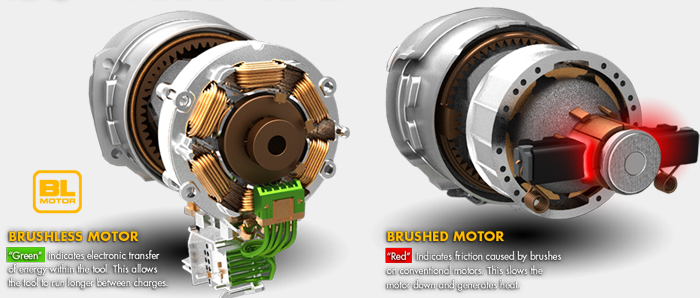
Image Source: ibtinc.com
Deciphering Brushless Motor Technology
The main difference between a traditional power tool and a new one lies in the motor itself. This is where brushless motor technology shines. To truly appreciate the advantages of brushless motors, we must first look at the older design.
Brushed Motors: The Traditional Way
For many years, most power tools used brushed motors. These motors have two main parts: a rotor (the spinning part) and a stator (the stationary part). To create the spinning motion, electricity must flow into the rotor windings.
In a brushed motor, this happens through physical contact. Carbon blocks, called brushes, rub against a segmented ring called the commutator. This constant rubbing creates friction and sparks.
| Feature | Brushed Motor |
|---|---|
| Commutation | Mechanical (Uses physical brushes) |
| Friction | High |
| Maintenance | Requires brush replacement |
| Efficiency | Lower (Energy lost to heat/friction) |
| Size/Weight | Often bulkier for the same power |
How Brushless Tools Work: The Electronic Switch
How brushless tools work by eliminating those physical contacts entirely. In a brushless setup, the magnets are on the rotor (moving part), and the coils (windings) are on the stator (stationary part).
Since there are no physical brushes to switch the electrical current, the tool needs an electronic brain. This brain is called the motor controller or inverter.
- Sensors: Small sensors, like Hall effect sensors, tell the controller the exact position of the rotor magnets at any moment.
- Controller Action: Based on this position data, the electronic controller precisely times when and where to send power to the stator coils.
- Continuous Spin: This timing ensures that the magnetic field pushing the rotor is always perfectly aligned to maintain continuous, powerful rotation.
This electronic switching is much faster and more precise than physical switching. It is the key to the performance leap seen in brushless vs brushed tools.
Key Benefits of Brushless Power Tools
Switching from brushed to brushless motors brings many tangible improvements for the user. These factors explain why professionals and serious DIYers prefer newer models. These are the core benefits of brushless power tools.
Superior Power and Torque
Because the electronic controller can optimize the power delivery, brushless motors produce more power from the same physical size. They deliver higher torque (turning force) right where you need it. This means you can drive larger screws or drill through harder materials without bogging down the tool.
Increased Runtime and Efficiency
One of the biggest selling points for cordless brushless tools is battery life.
- Brushless motor efficiency is significantly higher, often reaching 85% efficiency or more.
- Brushed motors lose a lot of energy as heat and friction from the rubbing brushes.
Less wasted energy means more of the battery’s power goes directly into doing work. A brushless tool can often run 30% to 50% longer on a single battery charge than a brushed tool of similar power.
Longer Tool Life and Less Maintenance
Since there are no carbon brushes to wear down and burn out, the main point of failure is removed. This drastically cuts down on required maintenance.
- No more checking or replacing worn brushes.
- Less internal wear means the tool lasts much longer, leading to lower long-term ownership costs.
This low brushless tool maintenance profile is a huge draw for consistent users.
Cooler Operation
Friction creates heat. Brushed motors get very hot because of the rubbing action. Brushless motors run much cooler because they operate with less physical resistance. Cooler motors perform better under heavy load and last longer. High heat degrades battery life and motor components over time.
Precision Control
The electronic control allows for finer adjustments. For delicate tasks, a brushless tool can offer smoother variable speed control. For high-power tasks, the controller ensures maximum power is delivered without overloading the motor.
For example, a brushless drill features often include advanced electronic clutch settings that are more consistent than mechanical clutches in older models.
Comparing Brushless and Brushed Tools
This table summarizes the practical differences users experience when choosing between motor types.
| Feature | Brushless Tools | Brushed Tools |
|---|---|---|
| Power Output | Higher torque and speed for size | Lower relative power |
| Battery Life | Excellent runtime per charge | Shorter runtime per charge |
| Longevity | Very long tool life | Shorter due to brush wear |
| Cost | Higher initial purchase price | Lower initial purchase price |
| Size/Weight | Often smaller and lighter for the same output | Can be bulkier |
| Noise Level | Generally quieter operation | Louder due to friction and arcing |
Deep Dive: Specific Brushless Tool Applications
The technology is best proven in high-demand tools where power and runtime are critical.
The Brushless Drill
A brushless drill is a staple for professionals. It uses its advanced control system to manage torque precisely.
When drilling into wood, the motor ramps up power smoothly. When switching to driving large lag bolts, the electronic control system immediately optimizes the current flow to deliver maximum torque without overheating the motor windings. Many modern brushless drill features now include overload protection that is instant and precise, preventing damage to the tool or the workpiece.
The Power of the Brushless Impact Driver
Perhaps no tool shows the advantages of brushless motors better than the impact driver. These tools deliver short, powerful rotational impacts to drive fasteners quickly.
A brushless impact driver manages these bursts of energy perfectly.
- It maximizes the number of impacts per minute (IPM).
- It ensures that the energy delivered is focused purely on driving the fastener, not on heating up the motor components.
Users find that cordless brushless tools like impact drivers can drive fasteners deeper and faster, using less battery charge than their brushed predecessors.
Other Brushless Tools
The technology spans the entire tool spectrum:
- Circular Saws: Brushless saws offer deeper, cleaner cuts because they maintain speed even when biting into thick lumber.
- Grinders: They maintain consistent RPMs under heavy load, which is vital for smooth material removal and extended disc life.
- Leaf Blowers: Brushless motors allow for lighter designs while achieving higher CFM (Cubic Feet per Minute) ratings, making yard work less tiring.
Power Source Considerations: Corded vs. Cordless Brushless Tools
While the term “brushless” is often associated with battery power, the motor technology itself applies to corded tools as well.
Cordless Brushless Tools
These tools rely heavily on the efficiency gains mentioned earlier. Battery technology (Lithium-Ion) pairs perfectly with brushless motors. The motors draw only the power they need, maximizing the limited energy stored in the battery. This is why manufacturers heavily promote their 18V or 20V systems as “brushless platforms.” The main benefit here is portability combined with power that rivals corded tools.
Corded Brushless Tools
Even corded tools benefit. For example, a corded hammer drill or demolition hammer with a brushless motor will draw less overall current from the wall outlet while delivering more consistent output, especially during high-draw tasks. They still offer longer life and reduced maintenance compared to their brushed corded counterparts.
Fathoming the Cost Factor
There is no denying that the initial purchase price for brushless tools is generally higher than for brushed equivalents. This price difference is due to several factors:
- Advanced Electronics: The integrated controller board (the “brain”) is complex and costly to manufacture.
- Precision Manufacturing: Brushless motors require tighter tolerances in assembly to ensure smooth electronic commutation.
- Market Position: Currently, brushless technology is marketed as the premium, professional-grade option.
However, when factoring in longevity and reduced service needs, the total cost of ownership often favors the brushless tool over several years. A brushed tool that needs a new set of brushes every year or two adds hidden costs that a brushless tool avoids entirely.
Maintenance and Longevity of Brushless Systems
As established, one of the major benefits of brushless power tools is reduced upkeep.
Minimal Mechanical Maintenance
The primary mechanical wear points in a brushed tool (brushes and commutator) are gone. This means routine maintenance focuses mainly on:
- Keeping the tool vents clean to prevent overheating.
- Ensuring battery contacts are free of debris.
- Regular lubrication if the gear train requires it (just like any power tool).
This simplification of brushless tool maintenance is a significant time-saver.
The Electronics Lifespan
The lifespan of the motor is now largely dependent on the electronic controller. Modern controllers are robustly built and sealed against dust and moisture. While electronic failure is possible, advancements in component quality mean that the electronics often last as long as the rest of the tool housing and mechanics.
Advanced Motor Control Features
The electronic nature of the brushless system allows manufacturers to integrate smart features that simply aren’t possible with mechanical commutation.
Overload Protection
If you jam a brushless impact driver while it’s running at full speed, the controller senses the sudden, drastic drop in RPM and immediately cuts power to prevent the motor windings from burning out. This reactive protection is faster than any mechanical fuse or circuit breaker.
Variable Speed Profiles
Some high-end tools allow users to program specific speed profiles for different materials. For instance, you could set a “soft start” for delicate countertop drilling, followed by a “high torque finish” setting for driving the final few turns of a large screw.
Communication with Batteries
In advanced systems, the tool motor communicates directly with the battery pack. The tool can request a specific power draw, and the battery management system (BMS) can adjust voltage and current delivery optimally, further enhancing brushless motor efficiency and battery health.
The Future Landscape of Power Tools
Brushless technology is rapidly becoming the standard, not the exception. As manufacturing costs for controllers drop and the demand for high-efficiency cordless brushless tools increases, the price gap between the two types continues to shrink. It is safe to assume that most new power tools released across all major brands will utilize brushless motor technology moving forward. The industry has shifted toward electronic control as the superior method for managing power delivery in dynamic applications.
Frequently Asked Questions (FAQ)
Are all modern power tools brushless?
No, but most new, high-end, or professional-grade tools are brushless. Many entry-level or budget-friendly tools still utilize traditional brushed motors because they are cheaper to produce.
Do brushless tools get hot?
Yes, all motors generate some heat, especially when working hard. However, because brushless motors avoid the major heat source created by friction between brushes and the commutator, they run significantly cooler than brushed tools under similar load.
Can I upgrade a brushed tool to brushless?
Generally, no. The motor housing, electronics, and often the physical design of the tool are completely different. You cannot simply swap a brushed motor for a brushless one. You need to purchase a tool specifically designed with brushless motor technology.
How do I know if a tool is brushless?
Manufacturers usually clearly label the tool housing with terms like “Brushless,” “BL,” or “EC” (Electronically Commutated). If the tool description mentions high efficiency or “up to 50% more runtime,” it is almost certainly a brushless model.
Are brushless tools more reliable than brushed tools?
Yes, in terms of component failure due to wear. Since the main wear item (the brush) is eliminated, the overall reliability and lifespan of the tool are significantly extended. The primary point of potential failure shifts to the electronics, which are generally very durable.