
Can you bypass the Sapience tool? Yes, it is possible to find ways around certain restrictions or limitations within the Sapience tool, though this often involves methods related to ethical hacking or identifying security flaws.
The Sapience tool, often used in various digital environments for tasks like content moderation, performance tracking, or even anti-cheat systems, is designed to be robust. However, no software is perfect. For those looking to explore the technical boundaries of this system, this guide offers an in-depth look at common approaches associated with Sapience tool bypass techniques. We focus on the technical perspective, akin to how ethical hacking Sapience systems is done—finding weak spots before malicious actors do.
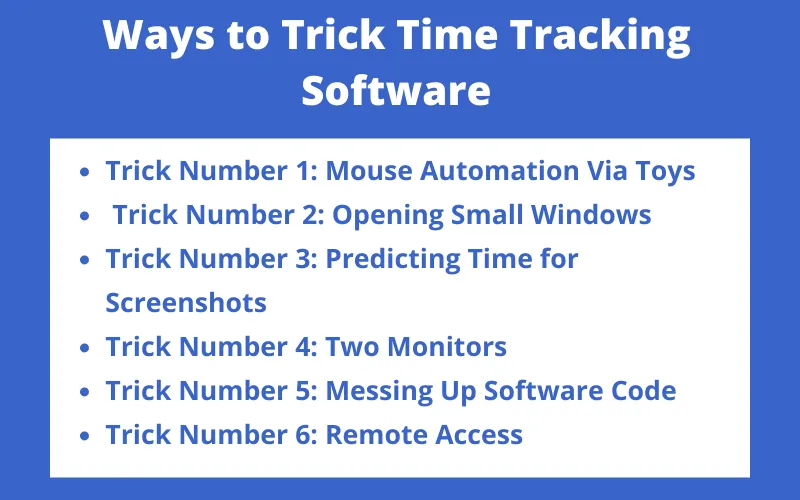
Image Source: timetracko.com
Deciphering Sapience Tool Limitations
Every complex software system has limits. These limits are the entry points for advanced users or security researchers aiming to test the system’s resilience. When discussing how to “cheat” a system like Sapience, we are really talking about probing its Sapience tool limitations.
Where Do Weaknesses Hide?
Security weaknesses often appear in areas where the system relies too heavily on assumptions or where its checks are not perfectly implemented.
- Input Validation Errors: If the tool expects specific data formats, sending slightly unusual, yet valid, data might confuse its processing logic.
- Timing Issues: Some checks need to happen very fast. If a user can perform an action slightly faster than the check can complete, they might sneak past.
- Environment Assumptions: The tool might assume it is running in a standard environment. Changing the environment can sometimes make the tool fail to activate its checks properly.
Exploring Sapience Vulnerability Assessment
A proper Sapience vulnerability assessment requires deep technical knowledge. It is similar to mapping out a fortress to find the weakest wall. Testers look for ways to make the tool report incorrect results or simply stop working as intended.
Automated Testing and Stress Points
Security professionals use automated scripts for this kind of testing. These scripts bombard the system with many requests quickly. This high volume often reveals flaws that manual testing misses.
We can break down the assessment into phases:
- Reconnaissance: Gather all public information about how the Sapience tool works.
- Probing: Send test data to see how the tool reacts to unusual inputs.
- Exploitation Attempts: Try known attack patterns against the tool’s interfaces.
Penetration Testing Sapience Environments
Penetration testing Sapience systems moves beyond just finding flaws; it involves actively trying to break into or manipulate the system using those flaws. This is a critical part of proactive security work.
Simulating Real-World Attacks
In a controlled setting, penetration testers simulate sophisticated attempts to fool the system. If Sapience is used for monitoring user behavior, the tester tries to act “normal” while doing something that should trigger an alert.
| Test Focus Area | Goal of Bypass Attempt | Required Skill Level |
|---|---|---|
| Data Injection | Force incorrect data interpretation. | Medium to High |
| Execution Flow Hijack | Change the order of system checks. | High |
| Configuration Override | Access settings the tool should hide. | Medium |
Utilizing Sapience Security Testing Tools
To test Sapience effectively, one often needs specialized Sapience security testing tools. These tools are often modified versions of general-purpose security scanners, tailored to interact specifically with Sapience’s known APIs or inputs.
Scripting Custom Payloads
Generic tools might not work well. Often, the most effective method involves scripting custom interactions. This means writing code that speaks the exact “language” the Sapience tool expects, but with malicious intent tucked inside.
For example, if Sapience checks file names, a custom script might test every possible character combination in a file name to see if the tool chokes on an unexpected symbol.
Exploiting Sapience: Technical Avenues
When we talk about exploiting Sapience, we mean successfully using a known flaw to achieve an unauthorized result. This requires precision.
Session Management Flaws
Many tools rely on secure session management. If a session token can be guessed or reused after it should have expired, an attacker can take over a legitimate user’s session. Bypassing Sapience restrictions can sometimes start here. If the tool is tied to a user session, hijacking that session bypasses many initial security checks.
API Misuse
If Sapience communicates via an Application Programming Interface (API), testing the API endpoints is key. Are all inputs sanitized? Can an authenticated user send requests that only an administrator should? These API flaws are prime targets for exploitation.
Navigating Sapience Anti-Cheat Mechanisms
If Sapience is used as an anti-cheat system (common in gaming or high-stakes testing environments), its Sapience anti-cheat mechanisms are the primary barrier. These mechanisms look for external software interference.
Obfuscation and Injection Avoidance
Anti-cheat tools often scan running processes and memory space. To bypass this:
- Code Obfuscation: Making the cheat software hard for Sapience to read and understand.
- Kernel-Level Interaction: Interacting with the operating system at a very low level, making it harder for user-level applications like Sapience to detect the modifications.
Note: Operating system interaction at the kernel level carries significant risks and is highly illegal or against terms of service in most contexts.
Identifying Sapience Security Flaws
Identifying Sapience security flaws requires deep analysis of the tool’s behavior under stress. This is where methodical testing pays off.
Reverse Engineering Insights
In certain legal and research contexts, reverse engineering the tool (looking at its compiled code to see how it works internally) can reveal hardcoded checks or default configurations that were not properly secured. This offers the clearest path to finding bypasses.
Practical Steps for Sapience Tool Bypass Attempts (Research Context)
For educational purposes, here are simplified conceptual steps someone might take during authorized security testing:
Step 1: Determine the Communication Channel
* How does the user input reach the Sapience engine? (Web form, API call, local service?)
Step 2: Intercept and Analyze Traffic
* Use proxies (like Burp Suite) to view the data being sent to and received from the tool.
Step 3: Modify Data Packets
* Change parameters slightly to see if the tool flags the input as invalid or accepts it incorrectly. Look for command injection opportunities.
Step 4: Test Rate Limits
* If the tool limits how often you can check something, try sending requests very rapidly to overwhelm its counting mechanism.
Comprehending Data Integrity Checks
Sapience often relies on ensuring data remains untampered between the user and the server. If this integrity check is weak, manipulation becomes easier.
Checksum Tampering
If the tool uses checksums (small codes that prove data hasn’t changed), finding a way to recalculate or inject a valid checksum for modified data is a form of bypassing Sapience restrictions. This is technically challenging but highly effective if successful.
Sapience Tool Bypass Scenarios: Case Studies (Conceptual)
Let’s look at two conceptual scenarios showing how limitations are pushed.
Scenario 1: The Logic Loop Bypass
If Sapience checks user actions sequentially (Check A, then Check B, then Check C), some exploits target the transitions.
- Action: User attempts action X.
- Sapience Check A: Passes (It looks okay).
- Sapience Check B: Fails (It detects the cheat).
- Bypass Attempt: Can we trigger Check B before Check A, or make Check A so time-consuming that Check B times out before it runs? This exploits sequencing flaws.
Scenario 2: Environmental Spoofing
If the tool only runs its heaviest checks when it detects it is on a ‘safe’ machine (e.g., not a virtual machine):
- The attacker modifies system identifiers (like hardware IDs or registry keys) that Sapience reads to determine its environment.
- The tool thinks it is on a standard, trusted endpoint and skips its most rigorous checks, opening the door for simpler exploits.
Ethical Considerations in Sapience Testing
It is crucial to reiterate that actively trying to compromise or exploit Sapience systems without explicit, written permission from the owner is illegal and unethical. The information here supports authorized security research, ethical hacking Sapience, and improving the software’s overall security posture. Unauthorized testing can lead to severe legal penalties.
Frequently Asked Questions (FAQ)
Q: Is it possible to permanently disable the Sapience tool?
A: Disabling the tool usually requires administrative access to the underlying infrastructure or server where the tool runs. Direct client-side bypasses rarely lead to permanent disabling.
Q: How long does it take to find a Sapience security flaw?
A: This varies greatly. Simple configuration errors can be found in minutes. Deep, complex logic flaws may take weeks of dedicated effort by a specialized team conducting a full Sapience vulnerability assessment.
Q: Are cloud-based Sapience implementations easier to bypass?
A: Cloud implementations often rely on more standardized APIs. While this standardization helps penetration testers know where to look, cloud providers also have better layered security, making deep-level exploitation much harder.
Q: What is the difference between cheating and penetration testing Sapience?
A: The difference is intent and permission. Penetration testing is authorized research done to improve security. Cheating is unauthorized activity intended to gain unfair advantage or cause harm.