
The lead acid golf cart battery weight typically ranges from 50 pounds to over 100 pounds per individual battery, while a lithium golf cart battery weight is significantly lighter, often weighing between 25 pounds and 50 pounds for equivalent power.
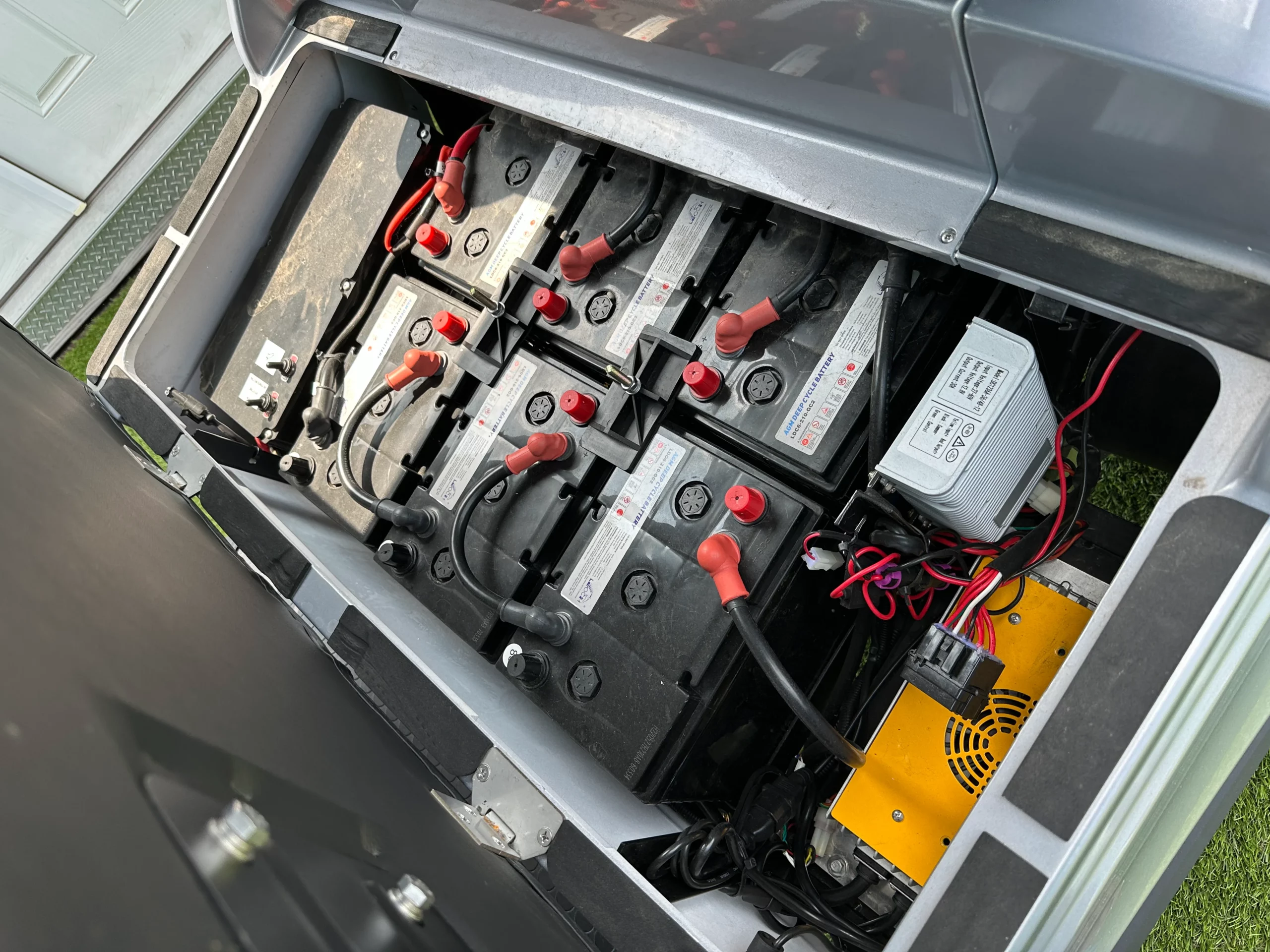
Image Source: hartvillegolfcarts.com
Why Battery Weight Matters for Your Golf Cart
The weight of your golf cart batteries is a big deal. It affects many things about how your cart runs. Heavier batteries can slow your cart down. They also make the cart use more energy to move. Knowing the golf cart battery weight by type helps you pick the best fit for your needs. This article will explore the weights for different batteries. We will look at lead-acid and lithium options.
The Impact of Weight on Cart Performance
When you add weight to a golf cart, you ask more of the motor. Think of pushing a heavy cart versus a light one. The heavy one needs more effort.
- Speed: More weight means slightly lower top speeds.
- Range: Heavier batteries use more power to move themselves. This cuts down on how far you can drive.
- Tire Wear: Heavier carts press down harder on the tires. This can make them wear out faster.
- Suspension Stress: The cart’s springs and shocks work harder with heavy golf cart batteries.
Deciphering Lead Acid Battery Weights
Lead-acid batteries are the older, more common type. They are known for being heavy. This weight comes from the lead plates and the liquid acid inside them.
How Much Does a Lead Acid Golf Cart Battery Weigh?
The exact lead acid golf cart battery weight depends on its size and capacity. Golf carts usually use 6-volt, 8-volt, or 12-volt batteries. Carts often use four, six, or eight batteries wired together.
| Battery Voltage | Typical Ampere Hours (Ah) | Approximate Weight (Lbs) |
|---|---|---|
| 6 Volt | 210 Ah | 55 – 65 lbs |
| 8 Volt | 170 Ah | 60 – 70 lbs |
| 12 Volt (Deep Cycle) | 105 Ah | 65 – 75 lbs |
| 12 Volt (High Capacity) | 150 Ah | 85 – 100+ lbs |
These numbers show that replacing a full set of six 6-volt batteries can add over 360 pounds to your cart! This makes the average weight of 12v golf cart battery higher than the smaller voltages.
Factors Affecting Golf Cart Battery Weight
Several things determine how much does a golf cart battery weigh, especially for lead-acid types.
Battery Capacity (Ah)
Capacity is measured in Ampere Hours (Ah). This tells you how long the battery can run a load. A higher Ah rating means the battery can run longer. To store more energy, the battery needs more lead plates. More lead means more weight. This is a direct link between golf cart battery ampere hour and weight. Bigger Ah batteries are always heavier.
Battery Chemistry and Design
Flooded lead-acid (wet cell) batteries are usually the heaviest. They need room for the liquid electrolyte. Sealed batteries like AGM (Absorbed Glass Mat) are slightly denser. They pack the acid into fiberglass mats. While slightly better sealed, they still rely on heavy lead.
Physical Size
Batteries must fit into the battery tray. Bigger trays hold larger batteries. Larger physical size almost always means more internal material, leading to higher weight.
Lithium Battery Weights: A Lighter Alternative
Lithium iron phosphate (LiFePO4) batteries are the modern choice. They use different chemistry. They don’t rely on heavy metals like lead. This makes a big difference in weight.
Lithium Golf Cart Battery Weight Comparison
The difference is clear when you compare lithium to lead-acid. Lithium batteries offer much more energy for their size and weight.
Here is a simple lithium golf cart battery weight comparison:
| Battery Type | Typical Ah (Equivalent Power) | Approximate Weight (Lbs) |
|---|---|---|
| Lead Acid (6V/225 Ah) | 225 Ah | ~60 lbs |
| Lithium (12V/100 Ah) | ~100 Ah (Often equivalent to 225 Ah LA) | ~30 lbs |
A single 12V lithium battery can often replace two or three 6V lead-acid batteries in terms of usable energy. This saves huge amounts of weight. If you replace six 6V lead-acid batteries (totaling perhaps 360 lbs) with six 12V lithium batteries, you might drop the total weight to around 180–200 lbs. That’s a weight saving of over 150 pounds!
The Advantage of Lighter Weight
Switching to lithium provides significant performance gains due to the weight reduction.
- Better Acceleration: The cart moves faster off the line.
- Extended Range: Less weight means the battery lasts longer per charge cycle.
- Less Strain on Components: Motor, controller, and suspension benefit from reduced load.
Interplay Between Weight, Lifespan, and Cost
The weight of a battery is tied to its construction, which also relates to its lifespan and initial cost.
Golf Cart Battery Weight and Lifespan
Generally, a heavier deep cycle battery weight in the lead-acid world suggests more material. More material can mean more life, but not always.
- Lead Acid: Heavier batteries often have thicker plates, which resist degradation longer. However, they are limited by the fundamental chemistry. Their life is often rated around 800 to 1,200 cycles.
- Lithium: Lithium batteries have a very long lifespan, often rated for 3,000 to 5,000 cycles. Even though they are much lighter, their advanced chemistry gives them superior longevity. A lighter lithium battery lasts far longer than a heavy lead-acid battery.
Weight and Initial Investment
Heavier lead-acid batteries are usually cheaper upfront. You pay less for the raw lead. Lithium batteries cost more initially. This is because the materials and manufacturing processes are more complex.
However, when you calculate the total cost over the battery’s life (Total Cost of Ownership), lithium often wins. You buy fewer sets over the years because they last so much longer, despite their initial heavier price tag.
Analyzing Battery Specifications and Weight
To really grasp the weight, look closely at the battery specs.
Interpreting Ampere Hour (Ah) and Weight
As mentioned, Ah is key. Manufacturers rate Ah differently based on discharge rates (how fast you pull the power out).
- A battery rated at 100 Ah at the 20-hour rate might only deliver 80 Ah at the 5-hour rate.
- The construction needed to maintain the higher Ah rating (more lead) increases the weight.
If two 12V batteries weigh differently, check the Ah rating carefully. If one is much heavier but has a similar Ah rating, it might be a higher-quality, more robust build.
Different 12V Battery Weights
The average weight of 12v golf cart battery can vary widely. Why?
- Starting vs. Deep Cycle: True deep cycle batteries, meant for long, slow discharge, often use thicker plates and are heavier than “starting” batteries, even if they have the same Ah rating.
- AGM vs. Flooded: AGM 12V batteries are sealed and generally denser than their flooded counterparts.
Factors Affecting Golf Cart Battery Weight When Changing Types
Switching battery types requires careful planning regarding weight changes.
- Weight Reduction: If you drop 150+ lbs by switching to lithium, your cart will handle differently. It might bounce slightly more on rough ground because there is less weight pressing the suspension down.
- Battery Tray Fit: Lead-acid batteries are built to standard physical sizes (like the L16, GC2 formats). Lithium batteries are often built in standard 12V blocks. You might need mounting brackets or spacers if the physical dimensions don’t match the old tray exactly, even if the weight is much less.
Maintaining the Weight of Your Battery System
Whether you choose heavy lead-acid or light lithium, maintenance affects performance and longevity.
Servicing Heavy Lead Acid Batteries
Heavy golf cart batteries require regular attention if they are flooded lead-acid types.
- Water Levels: You must check and add distilled water regularly. Low water exposes the lead plates. This causes damage and shortens battery life.
- Cleaning: Acid spills or corrosion build-up around the terminals add resistance and hinder charging.
- Equalization Charging: Periodically, these batteries need a special charge cycle to keep the plates healthy.
Failing to maintain these batteries means their lifespan shortens, meaning you replace them sooner, increasing your long-term cost, even if the initial battery weight was low.
Lithium Care and Weight Stability
Lithium batteries require minimal maintenance. They have an internal Battery Management System (BMS). This system protects the cells from overcharging or deep discharging.
- The weight stays constant throughout the battery’s life. Lead-acid batteries lose electrolyte (water) over time, slightly changing their internal composition and weight over many years of service.
Comprehending Battery Density
Battery density measures how much energy is packed into a given weight or volume.
Lead-acid batteries have low energy density. They require a lot of material (lead and acid) to store the required energy. This is why they are so heavy.
Lithium batteries boast high energy density. They store much more energy per pound. This is the main technical reason for the massive lithium golf cart battery weight comparison advantage.
This high density makes them perfect for applications where weight is critical, like electric vehicles or portable electronics, and certainly for golf carts where range is paramount.
FAQ Section
What is the typical total weight of batteries in a 48-volt golf cart?
A typical 48-volt system uses six 8-volt batteries or four 12-volt batteries. If using heavy lead-acid batteries (averaging 70 lbs each), the total weight is around 420 to 490 pounds. Switching to lithium could reduce this total to about 200 to 250 pounds.
Are heavier golf cart batteries always better?
Not necessarily. For lead-acid batteries, heavier often means thicker plates, which can lead to a longer lifespan within the lead-acid category. However, when comparing lead-acid to lithium, the lighter lithium battery offers superior lifespan, performance, and energy density.
Does the weight of the battery affect range more than the battery’s Ah rating?
Both are very important. The Ah rating dictates how much energy is available. Weight dictates how much of that energy is spent just moving the battery itself. A very heavy battery with high Ah might offer less usable range than a lighter battery with slightly lower Ah because the heavy battery drains itself faster just moving its own mass around the course.
How do I know the Ampere Hour rating impacts the weight?
You can check online specifications from manufacturers. Look at two batteries of the same voltage (e.g., 12V) but different Ah ratings (e.g., 100Ah vs. 150Ah). You will almost always see the 150Ah battery listed as significantly heavier. This confirms the link between golf cart battery ampere hour and weight.
Can I mix heavy and light batteries in my golf cart?
No, you absolutely should not mix battery types (like mixing lead-acid and lithium) or mix batteries of different ages or Ah ratings. This can severely damage the batteries, create unbalanced charging, and pose safety risks. Always replace the entire set with batteries of the same chemistry and similar age.