
The exact, precise total number of people who saw the resurrected Jesus is not stated directly in one specific verse, but biblical accounts of the resurrection detail appearances to groups ranging from a few individuals to crowds, likely totaling several hundred people across various resurrection appearances.
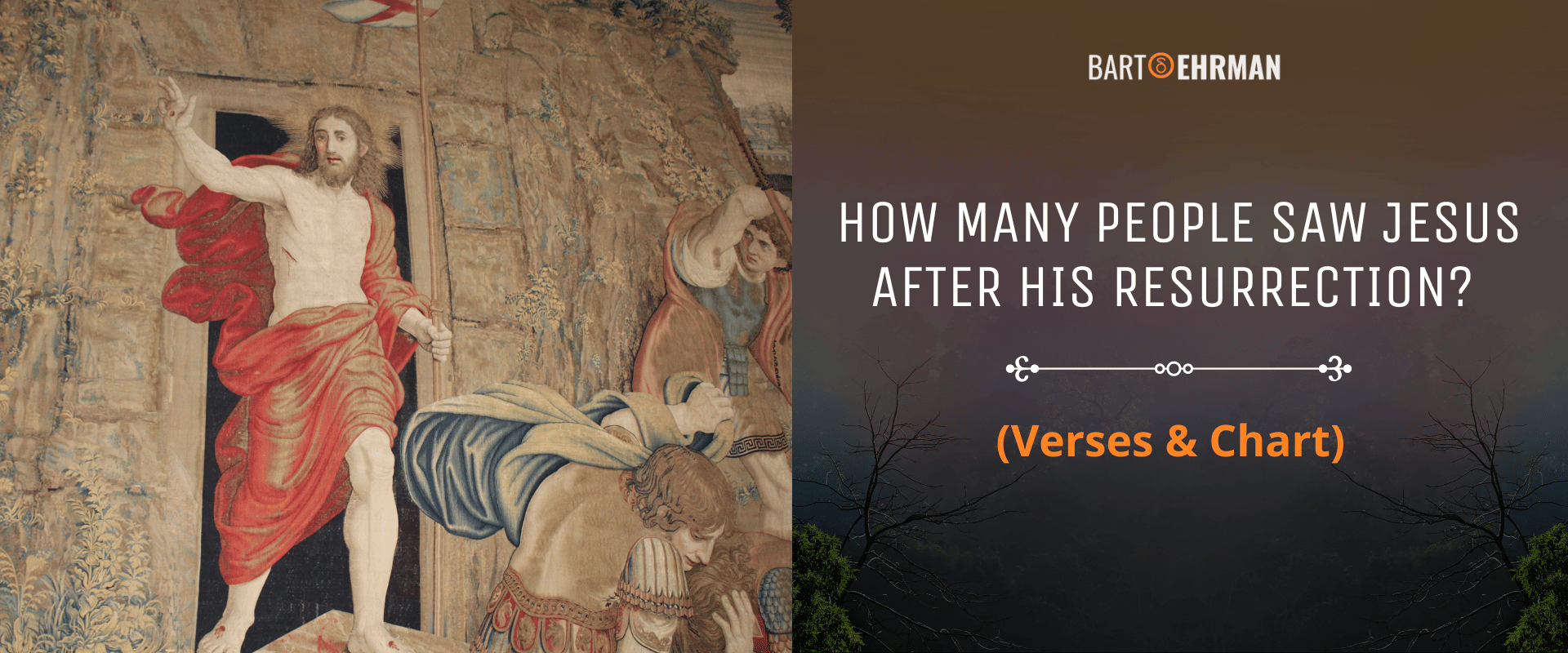
Image Source: www.bartehrman.com
The Core Evidence: Examining Resurrection Eyewitness Accounts
The core of the Christian faith rests upon the historical claim that Jesus of Nazareth rose from the dead after his crucifixion. Central to proving this claim are the Resurrection eyewitness accounts found in the New Testament. These accounts are not mere legends; they focus heavily on who saw Jesus alive after his death. Determining the number of resurrection witnesses requires careful study of the various Gospel narratives and Pauline epistles.
First Sightings: The Women and Peter
The very first people to witness the empty tomb and then the risen Lord were women. This detail is significant because, in the first century, the testimony of women was often not valued highly in legal settings. The Gospels focus on recording these events, not on maximizing the crowd size initially.
Mary Magdalene and the Other Women
The Gospel of John records Mary Magdalene’s encounter (John 20:11–18). Matthew states that several women encountered Jesus after the resurrection morning (Matthew 28:9–10). While the exact count varies slightly between the Gospels, it involved at least two or three women initially, growing to several who saw Him together.
Peter’s Private Viewing
Paul mentions a specific, important appearance to Peter (Cephas). This was a crucial event for solidifying the disciples’ faith, as Peter was the leader of the early group.
1 Corinthians 15:5 states: “He appeared to Cephas, and then to the Twelve.”
This confirms that Peter saw Him individually or in a very small group shortly after the resurrection.
Appearances to the Disciples
The disciples saw the resurrected Jesus on multiple occasions. The biggest challenge in counting the witnesses comes from understanding overlap—did Thomas see Jesus on Sunday, and then see Him again a week later?
The Road to Emmaus
Luke tells the story of two disciples walking to Emmaus. Jesus joins them, but they do not recognize Him until He breaks bread with them (Luke 24:13–35). This makes for two confirmed witnesses during that specific event.
The Upper Room Gatherings
Several accounts describe Jesus appearing to the remaining disciples, often excluding Thomas at first.
- First Appearance (Luke 24:36–43; John 20:19–23): This gathering involved at least ten disciples (minus Thomas). Jesus showed them His hands and side and ate fish with them.
- Second Appearance (John 20:24–29): A week later, Thomas joins the group. This appearance solidifies the count for this setting to eleven disciples seeing Him together.
These accounts form the primary biblical accounts of the resurrection, establishing a core group of believers who were repeatedly shown the risen Lord.
The Great Commission Appearings
Later post-resurrection appearances involved larger groups, particularly those connected to Jesus’ final instructions.
The Sea of Galilee (John 21)
Here, seven disciples (including Peter, Thomas, Nathanael, and the sons of Zebedee) saw Jesus by the Sea of Tiberias after a miraculous catch of fish. This is a group of seven witnesses plus Jesus.
The Mountain in Galilee (Matthew 28:16–20)
This is perhaps the largest reported single gathering mentioned in the Gospels. Matthew records that Jesus went to a mountain in Galilee and “then the eleven disciples went to Galilee, to the mountain where Jesus had told them to meet” (Matthew 28:16).
“When they saw him, they worshiped him; but some doubted.” (Matthew 28:17)
The size of this group is not explicitly stated, but “the eleven disciples” were present. However, this gathering was likely larger than just the eleven apostles, as many followers were instructed to gather there. Scholars often suggest this gathering included numerous followers—perhaps scores, if not hundreds, of people awaiting instructions.
The Pauline Testimony: Expanding the Witness Pool
The most significant numerical data comes from the Apostle Paul, writing less than 25 years after the events. Paul was keen on establishing the historical reality of the resurrection for the early church in Corinth.
1 Corinthians 15: The Creedal Statement
In 1 Corinthians 15:3–8, Paul lists individuals and groups who saw Jesus after He rose. This is strong biblical evidence for Jesus’ resurrection because it was written so early, citing traditions already established among believers.
| Appearance Group | Number of Resurrection Witnesses (Minimum) | Biblical Reference | Notes |
|---|---|---|---|
| Cephas (Peter) | 1 | 1 Corinthians 15:5 | Confirmed eyewitness. |
| The Twelve | 11 | 1 Corinthians 15:5 | Refers to the core apostles. |
| Over Five Hundred Brothers | 500+ | 1 Corinthians 15:6 | Largest singular group mentioned. |
| James | 1 | 1 Corinthians 15:7 | Appearance to Jesus’ brother. |
| All the Apostles | Multiple | 1 Corinthians 15:7 | A general summary reference. |
The mention of “more than five hundred brothers” gathered at one time is crucial. Paul challenges his readers: “Now most of them are still living, but some have died. Then I also was arrested, and then James appeared to me.” (1 Corinthians 15:6-8, paraphrased). Paul is essentially saying, “If you doubt this, go ask the 500 people still alive who saw Him!” This strongly suggests a major, memorable event involving hundreds of people.
Post-Resurrection Sightings of Paul
Paul himself claims a unique post-resurrection sighting on the road to Damascus, where Jesus appeared to him, converting him (Acts 9). While this is a different context than the Galilean appearances, it remains another significant personal encounter with the risen Christ, adding one more major witness to the list.
Collation: Figuring Out the Total Number of Resurrection Witnesses
When assessing how many people saw the resurrected Jesus, we must sum the minimum confirmed groups and extrapolate based on the context provided in the resurrection narratives.
Calculating Minimum Confirmed Witnesses
- Women at the Tomb: At least 2–3 (Varies by Gospel). Let’s use 3 conservatively.
- Peter: 1 (Separate mention).
- Emmaus Pair: 2.
- The Ten (Initial Upper Room): 10.
- The Eleven (Second Upper Room): 11 (Includes Thomas).
- Sea of Galilee Group: 7 (Confirmed named individuals).
- Paul’s Damascus Road Appearance: 1 (Paul himself).
Subtotal of Distinct, Named, or Small Group Appearances: $3 + 1 + 2 + 10 + 11 + 7 + 1 = 35$ people.
This calculation is highly conservative. It assumes no overlap between the groups (which is unlikely—Peter was likely in the Upper Room and by the Sea of Galilee).
Incorporating the Larger Crowds
The key to the number of resurrection witnesses lies in the two major crowd events:
- The Galilean Mountain Meeting (Matthew 28): This meeting included the eleven disciples, but the context implies many others. If we assume “the eleven” were there alongside many other followers who had traveled to Galilee for instruction, the number could easily jump to dozens or even over a hundred.
- The 500 Brothers (1 Corinthians 15): This is the strongest piece of evidence for the resurrection regarding sheer numbers. Paul claims over 500 people saw Jesus at once. This event is not explicitly detailed in the Gospels, suggesting it might be a separate event, perhaps the Great Commission fulfillment after the Ascension, or another major gathering in Galilee.
If we take Paul’s claim at face value—that 500 people saw Jesus at one time—that single event dwarfs all other recorded instances combined.
Conclusion on Numbers:
While the Gospels focus on the core disciples who needed conviction, Paul’s letter confirms that the number of people who saw the resurrection appearances extends well beyond the immediate apostolic circle.
- The core circle of verifiable witnesses (apostles and close followers) is around 15-20 individuals.
- The total number of people who experienced post-resurrection sightings, confirmed by multiple sources, is likely in the hundreds.
- The absolute highest figure cited by a primary source is 500+ people seeing Jesus together.
Analyzing the Nature of the Witnesses
Why did the Gospel writers and Paul focus on specific individuals rather than giving a precise census? They were concerned with testimony, not statistics. The quality and diversity of the witnesses matter more than the raw count.
Diversity Among the Witnesses
The biblical accounts of the resurrection stress that Jesus appeared to various types of people:
- Women (Mary Magdalene, the other women).
- The inner circle (Peter, John).
- The doubting disciple (Thomas).
- Larger informal groups (Emmaus, Sea of Galilee).
- Mass gatherings (Galilee mountain, the 500).
- Jesus’ own brother, James (a skeptic before the resurrection, according to John 7:5).
This diversity was vital for early preaching. If only women saw Him, critics could dismiss it. If only a few loyal followers saw Him, skeptics could claim hallucination. Seeing Him by hundreds validates the event as public and historical.
The Reliability of the Resurrection Eyewitness Accounts
Critics often suggest the resurrection narratives are simply shared delusions or wishful thinking. However, historians note that shared delusions rarely persist over decades, especially when those sharing the claims face severe persecution.
- Timeliness: Paul wrote 1 Corinthians 15 around 55 AD, just 20-25 years after the event. He references oral traditions that were even older. This short timeframe makes later invention highly improbable.
- Confrontational Appearances: Jesus appeared physically, asking to be touched, eating food, and engaging in long conversations (Luke 24, John 21). These were not fleeting visions but sustained interactions.
- The Empty Tomb: The women found the tomb empty, an event that spurred the initial investigation by the disciples and was known to the authorities (Matthew 28:11–15).
The sheer volume and consistency across different writers (Matthew, Mark, Luke, John, and Paul) regarding the fact that many people saw Jesus alive points toward a genuine historical event, as recorded in the Resurrection eyewitness accounts.
The Significance of the 500 Brothers
Why does Paul dedicate a specific line item to the 500?
The Jewish tradition required two or three witnesses for legal establishment of a fact (Deuteronomy 19:15). While the resurrection was not a legal trial, the early church needed powerful testimony to counter Jewish and Roman claims that the body was stolen or that the disciples fabricated the story.
Paul presents the 500 as an undeniable, cross-checkable phenomenon. Even if a few core disciples were deemed unreliable or mistaken, how could 500 people—many of whom were likely strangers to Paul—all be wrong about seeing a resurrected man?
This specific citation elevates the number of resurrection witnesses from a small group needing convincing to a massive contingent that formed the bedrock of the initial Christian movement. These post-resurrection sightings convinced hundreds of people almost overnight to change their lives and preach a message that led to imprisonment and death.
How Did Different Narratives Shape the Witness Count?
The Evangelists selected details based on their theological goal, not journalistic completeness.
- John (The Beloved Disciple): Focuses heavily on Mary Magdalene and Thomas, emphasizing belief through personal encounter.
- Luke (The Historian): Focuses on the Emmaus road and the eating of food, proving physical reality to skeptics.
- Matthew (The Jewish Audience): Highlights the group meeting in Galilee, connecting the resurrection to Jesus’ instruction for the world mission.
- Paul (The Theologian): Focuses on proving the historical baseline, listing Peter, the Twelve, and the 500 to confirm the reality of the event before discussing its meaning.
Each of these resurrection narratives supports the overall claim: Jesus was seen by many, in many places, over a 40-day period.
FAQ Section
What is the difference between the resurrection appearances and post-resurrection sightings?
The terms are largely interchangeable. Resurrection appearances generally refer to the specific documented times Jesus showed Himself alive following the crucifixion (e.g., to the disciples in the Upper Room). Post-resurrection sightings is a broader term that includes all those appearances, as well as Paul’s experience, spanning the 40 days between the resurrection and ascension.
Did the resurrection witnesses include non-believers?
The primary resurrection eyewitness accounts focus on those who were already followers (disciples, brothers, 500 brothers). However, the appearance to James (Jesus’ brother) is significant because James was reportedly not a believer during Jesus’ earthly ministry (John 7:5). His conversion following a personal appearance is a powerful piece of biblical evidence for Jesus’ resurrection.
How long after the resurrection did these sightings occur?
The Gospel accounts detail appearances over approximately 40 days, culminating in the Ascension (Acts 1:3). This window allowed for multiple resurrection appearances to various groups as Jesus solidified the faith of His followers before leaving them to continue the mission.
Why don’t the Gospels list every single person who saw Jesus?
The Gospels function as theological documents aimed at persuading readers that Jesus is the Messiah who conquered death. They prioritize specific, formative moments (like Peter’s restoration or Thomas’s doubt) over creating a demographic report. Paul, however, provides the necessary weight of the crowd by mentioning the 500 brothers.
Could the 500 people have been hallucinating?
While individuals can experience hallucinations, mass hallucinations are extremely rare and usually short-lived. The event involving the 500 is reported by Paul as a physical, observable event that was verifiable by living testimony decades later. Furthermore, the disciples saw the resurrected Jesus in various contexts over 40 days, making a single mass hallucination unlikely to account for all post-resurrection sightings.