
A golf cart usually takes between six and eight batteries to operate correctly, though the exact golf cart battery count depends entirely on the voltage system of the cart. Most standard electric golf carts use a 36 volt golf cart system (requiring six 6-volt batteries) or a 48 volt golf cart configuration (requiring eight 6-volt batteries or six 8-volt batteries).
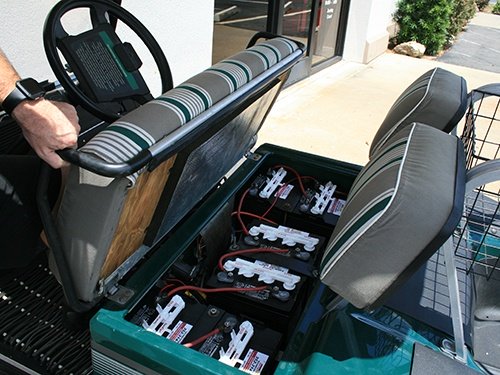
Image Source: jsgolfcarts.com
Deciphering the Number of Batteries in Your Golf Cart
Knowing the correct golf cart battery setup is vital for maintenance, performance, and safety. Getting the number or type of battery wrong can seriously damage your cart’s electronics and drastically shorten its lifespan. The number of batteries is directly linked to the voltage needed to power the electric motor.
Voltage is the Key Factor
Electric golf carts use a system of batteries wired together in series. Wiring batteries in series adds up the voltage while keeping the amperage the same. This total voltage is what drives the cart.
Common Golf Cart Voltages
Electric golf carts are built around three main voltage standards: 36V, 48V, and sometimes 72V for specialized or high-power carts.
36 Volt Systems
A 36 volt system is common in older, smaller, or lightweight golf carts.
- Battery Count: Typically six batteries.
- Battery Voltage Required: Each battery must be a 6-volt unit.
- Math: 6 batteries × 6 volts/battery = 36 total volts.
48 Volt Systems
The 48 volt golf cart configuration is the modern standard for most full-sized, modern electric carts. This higher voltage generally offers better torque and efficiency.
- Battery Count Option 1: Eight batteries.
- Battery Voltage Required: Each battery must be a 6-volt unit.
- Math: 8 batteries × 6 volts/battery = 48 total volts.
- Battery Count Option 2: Six batteries.
- Battery Voltage Required: Each battery must be an 8-volt unit.
- Math: 6 batteries × 8 volts/battery = 48 total volts.
72 Volt Systems (Less Common)
Some heavy-duty, lifted, or customized carts use 72V systems for maximum power.
- Battery Count Option 1: Twelve batteries.
- Battery Voltage Required: Each battery must be a 6-volt unit.
- Math: 12 batteries × 6 volts/battery = 72 total volts.
- Battery Count Option 2: Nine batteries.
- Battery Voltage Required: Each battery must be an 8-volt unit.
- Math: 9 batteries × 8 volts/battery = 72 total volts.
Types of Golf Cart Batteries
The “how many” question is only half the answer. The “what kind” is just as important for good performance. You must use the correct types of golf cart batteries.
Lead-Acid Batteries (Flooded and Sealed)
These are the most common and traditional power sources. They are typically referred to as 12 volt golf cart batteries if you are talking about single car batteries, but for carts, we use 6V, 8V, or 12V deep cycle units wired together.
- Flooded Lead-Acid (Wet Cell): These are the cheapest upfront. They require regular watering with distilled water. They must be kept upright.
- Sealed Lead-Acid (SLA/AGM/Gel): These are maintenance-free. They do not need water added. Gel batteries handle deep discharges better but charge slower.
Lithium-Ion Batteries (LiFePO4)
Lithium batteries are the premium option gaining popularity rapidly.
- Pros: Lighter weight, much longer lifespan, faster charging, and they maintain voltage better under load.
- Cons: High initial purchase cost.
- Setup Note: Lithium batteries are often used as single large blocks rather than many small cells wired in series to achieve the system voltage (e.g., one 48V lithium pack instead of eight 6V lead-acid batteries).
Determining Your Current Golf Cart Battery Configuration
If you just bought a used cart or inherited one, you might not know the original golf cart battery configuration. Checking the existing setup is the easiest way to figure out what you need.
How to Check Your Current Setup
- Count the Batteries: Simply count the number of individual battery boxes or physical batteries installed under the seat or hood. This gives you the golf cart battery count.
- Check the Voltage Label: Look for labels on the cart’s controller housing or the battery charger. It should clearly state 36V or 48V.
- Examine the Battery Specs: If you can safely access and read the side of one battery, note its listed voltage (6V, 8V, or 12V).
Example Check: If you count six batteries, and they are all labeled 6V, you have a 36V system. If you count eight batteries labeled 6V, you have a 48V system. If you count six batteries labeled 8V, you also have a 48V system.
The Importance of Deep Cycle Batteries for Golf Carts
You cannot just use any battery in a golf cart. Golf carts need specialized deep cycle batteries for golf carts.
What Makes a Battery Deep Cycle?
A starting battery (like the one in a car) is designed to deliver a huge burst of power quickly, then rest. A deep cycle battery is designed to deliver a steady, lower amount of power over a long period, and then be recharged fully. This is exactly what a golf cart needs to run the motor and accessories for hours.
Using a standard car starting battery will quickly ruin it. The repeated deep draining will destroy the internal plates, leading to very short battery life.
Matching Amps and Amp-Hours (Ah)
While voltage determines how fast and how hard the cart runs, Amp-Hours (Ah) determine how far it goes.
- Ah measures the battery’s capacity—how long it can supply power.
- When replacing batteries, always match the Ah rating as closely as possible to the original set. Using batteries with a significantly lower Ah rating will mean your cart won’t travel as far between charges.
Wiring: Connecting Golf Cart Batteries in Series
Properly connecting golf cart batteries is crucial for achieving the correct system voltage and ensuring all batteries drain and charge evenly. This process involves wiring batteries in series.
Series Wiring Explained Simply
Wiring batteries in series means you connect the positive (+) terminal of one battery to the negative (-) terminal of the next battery, and so on, creating a chain.
- Voltage Adds Up: This process adds the individual battery voltages together to reach the system total (36V, 48V, etc.).
- Amperage Stays the Same: The total amp-hours (capacity) remains the same as the lowest Ah rating in the entire series string. This is why you should always replace all batteries at the same time with the same Ah rating. Mixing old and new batteries ruins the performance of the entire set.
Step-by-Step Guide for Connecting Golf Cart Batteries
Safety First: Always disconnect the main power (forward/reverse switch or controller) before working on the batteries. Wear safety glasses and gloves. Use the correct size wrench for the terminals.
- Layout and Orientation: Place all batteries in their tray. Ensure they are oriented correctly so that the positive and negative posts are accessible for connecting golf cart batteries.
- Initial Connection (The Jump): Take a short, heavy-duty jumper cable. Connect the positive (+) terminal of Battery #1 to the negative (-) terminal of Battery #2.
- Continue the Chain: Connect the positive (+) of Battery #2 to the negative (-) of Battery #3. Continue this pattern down the line until you have connected all batteries except for the very first positive and the very last negative.
- The Main Leads:
- The remaining negative (-) terminal on the first battery in the chain connects to the main negative cable leading to the motor controller.
- The remaining positive (+) terminal on the last battery in the chain connects to the main positive cable leading to the motor controller.
- Equalizing Charge: Before you use the cart, the batteries should be fully charged individually if they are brand new. If you are replacing old batteries, charge the newly connected set fully. This ensures they start the cycle in agreement.
Maintaining Battery Health: Water and Equalization
If you use flooded lead-acid batteries, maintenance directly impacts the golf cart battery count efficiency over time.
Watering Schedule
Check the electrolyte levels monthly. Add only distilled water until the plates are covered by about 1/8 inch of fluid. Never overfill.
Equalization Charge
Over time, different batteries in the series can sulfate (build up hard crystals on the plates). An equalization charge is a slow, gentle overcharge that uses electrolysis to break down these crystals and restore capacity. Most modern smart chargers handle this automatically, but older or cheaper chargers may require manual periodic equalization charging.
Troubleshooting Common Battery Count Issues
If your cart isn’t running right, the battery system is the first place to look.
My Cart Won’t Move or Moves Slowly
This usually means the total voltage is too low.
- Check Connections: Loose or corroded cables cause resistance. Resistance drops voltage under load, slowing the motor. Clean and tighten all terminals.
- Verify Battery Voltage: Test each battery individually with a multimeter. If one 6V battery reads 5V, it is likely dead or severely damaged. This single weak link drags down the entire string.
- Incorrect Setup: Did you accidentally wire two 12V batteries in parallel instead of series? This would give you 12V total instead of 24V (if you have a 24V system), leading to poor performance.
My Charger Light Stays Green Immediately
If you plug in a charger and it immediately shows a full charge (green light), the circuit likely isn’t registering any load.
- Dead String: All the batteries might be so low they cannot accept a charge, or the main cables to the controller are disconnected.
- Charger Mismatch: You might be using a 48V charger on a 36V system, or vice versa. The charger senses the voltage instantly and shuts off, thinking the charge is complete. Always match the charger voltage to the golf cart battery configuration.
Can I Mix Different Voltages or Ah Ratings?
No. Mixing different voltages (e.g., a 6V battery with an 8V battery) will cause the lower-voltage battery to be constantly drained by the higher-voltage ones, leading to rapid failure of the weaker battery and potential damage to the controller. Mixing Ah ratings means the entire string will only have the capacity of the lowest-rated battery.
Summary of Golf Cart Battery Requirements
The required golf cart battery count is determined entirely by the cart’s designed operating voltage. Always confirm the system voltage (36V or 48V) first, then select the appropriate number of 6V or 8V deep cycle batteries for golf carts needed to achieve that total.
| System Voltage | Common Battery Voltage | Minimum Battery Count | Maximum Battery Count |
|---|---|---|---|
| 36 Volt | 6 Volt | 6 | 6 |
| 48 Volt | 6 Volt | 8 | 8 |
| 48 Volt | 8 Volt | 6 | 6 |
| 72 Volt | 6 Volt | 12 | 12 |
| 72 Volt | 8 Volt | 9 | 9 |
By paying close attention to the voltage, the specific types of golf cart batteries, and ensuring you have the correct golf cart battery setup, you ensure your cart runs smoothly for years.
Frequently Asked Questions (FAQ)
Q: Can I replace my 36V system with a 48V system?
A: Yes, you can upgrade from 36V to 48V, but it is a major project. You must replace the batteries, the main solenoid, the charger, and most importantly, the electronic motor controller. The motor itself might handle 48V, but the controller is the limiting factor and must be upgraded to handle the higher power flow.
Q: Are 12 volt golf cart batteries used in modern carts?
A: Standard 12V batteries are usually only used as the auxiliary battery (to run lights, radio, etc.) in some larger, gasoline-powered carts, or if you are using a very specialized, small low-speed vehicle (LSV) setup. For the main propulsion system, the 6V and 8V deep cycle batteries for golf carts are standard for lead-acid systems.
Q: How do I know if my batteries are wired in series or parallel?
A: If the system voltage matches the total voltage achieved by adding the individual battery voltages (e.g., six 6V batteries wired in series equal 36V), they are wired in series. If they were wired in parallel, the voltage would remain 6V, but the Amp-Hour capacity would be very high. Golf cart propulsion systems almost exclusively use series wiring.
Q: How long should a set of golf cart batteries last?
A: With proper maintenance (watering, charging, and avoiding deep discharges), a set of good quality flooded lead-acid deep cycle batteries for golf carts should last between 3 to 5 years. Lithium batteries often last 8 to 10 years or more.
Q: Why are there different counts for the same voltage (e.g., 48V can be 6 or 8 batteries)?
A: This difference comes down to the available physical space in the battery tray and the voltage rating of the standard battery available when the cart was manufactured. Manufacturers choose between using more lower-voltage batteries (eight 6V units) or fewer higher-voltage batteries (six 8V units) based on cost and engineering design.