
The golf cart battery lifespan typically ranges from 3 to 10 years, depending heavily on the battery type, usage patterns, and the care they receive.
Knowing how long your golf cart batteries will last is key to saving money and avoiding frustrating downtime. Whether you have a standard electric cart or a high-performance model, the battery is the heart of the machine. This guide explores what determines the deep cycle battery life you can expect and offers simple tips to help your batteries go the distance. We will look at both older lead-acid types and modern lithium options to give you a full picture of golf cart battery replacement interval expectations.
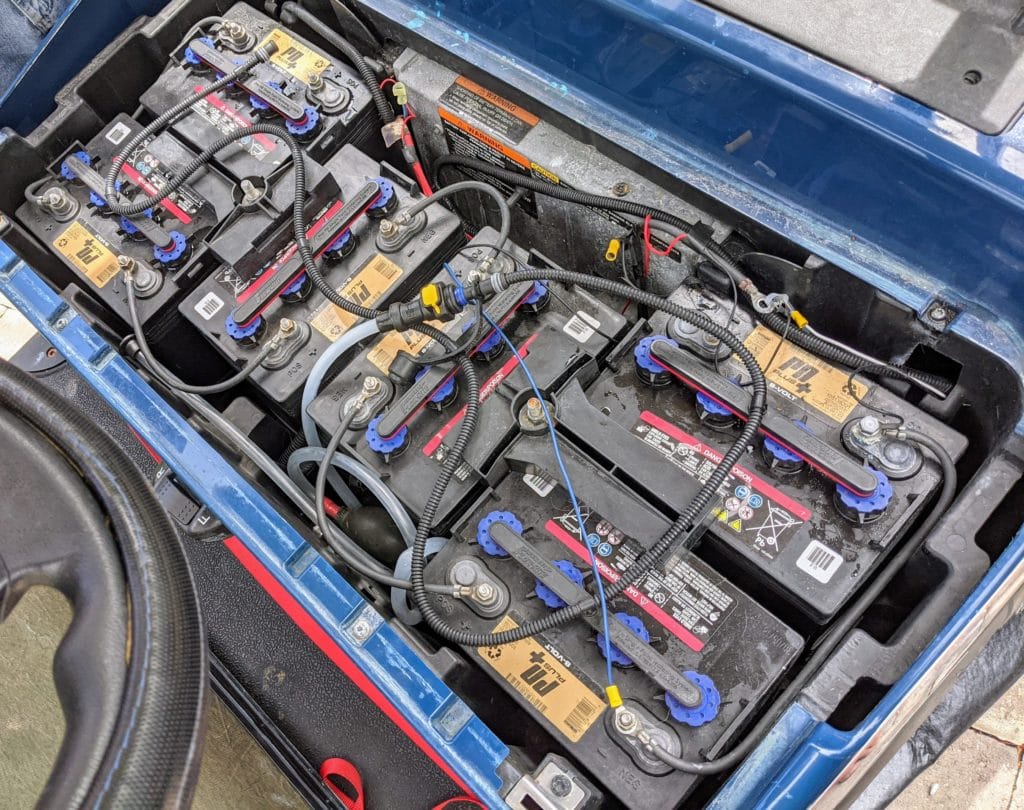
Image Source: battlebornbatteries.com
Deciphering Battery Types and Expected Life
Not all golf cart batteries are created equal. The material they are made from plays the biggest role in how long they stay charged and how many times they can be recharged.
Lead Acid Golf Cart Battery Duration
Traditional golf carts use deep cycle lead-acid batteries. These are reliable and usually cheaper upfront. However, they need regular care.
You can expect a typical lead acid golf cart battery duration to be around 5 to 7 years with excellent maintenance. If care is neglected, this time can shrink to just 3 years.
Table 1: Lead Acid Battery Life Expectations
| Maintenance Level | Expected Lifespan (Years) | Key Requirement |
|---|---|---|
| Excellent | 7+ | Regular watering and cleaning |
| Good | 5–7 | Consistent charging schedule |
| Poor | 3–5 | Infrequent watering or over/under-charging |
Even specific brands have different expected lives. For example, many owners ask, “how long do Trojan golf cart batteries last?” Trojan batteries are well-regarded. With good care, they often last 6 to 8 years, sometimes longer. This puts them at the higher end of the lead-acid scale.
Lithium Golf Cart Battery Lifespan
Lithium batteries (usually Lithium Iron Phosphate or LiFePO4) are the newer choice. They cost more upfront but offer major long-term savings.
The lithium golf cart battery lifespan is much greater than lead-acid. Most quality lithium batteries are rated for 8 to 10 years, or they come with a warranty based on a set number of charge cycles (often 3,000 to 5,000 cycles). Since you rarely fully drain a lithium battery, the cycle life translates to many years of use.
Lithium batteries also do not require watering or the specific charging discipline that lead-acid batteries need. This means their lifespan is less affected by minor user errors.
Factors Affecting Golf Cart Battery Life
Several things influence how long your batteries will actually perform well. Knowing these factors affecting golf cart battery life lets you take control.
Depth of Discharge (DOD)
This is the most important factor for any deep cycle battery. DOD is how much of the battery’s total energy you use before recharging it.
- Shallow Discharges are Best: If you only use 20% of the battery’s power each day and recharge it, the battery lasts much longer.
- Deep Discharges Hurt: Running the battery down to 50% or more regularly shortens its life quickly. For lead-acid, draining below 50% is very stressful.
Think of it like steps on a staircase. Every time you run down the stairs (deep discharge), the stairs wear out faster. Taking only a few steps (shallow discharge) keeps the stairs in good shape for much longer.
Charging Habits
How you charge the batteries matters a lot, especially for lead-acid.
- Undercharging: If you leave a lead-acid battery partly charged, it builds up “sulfation.” This is a hard, crusty material that blocks the battery’s ability to take a full charge later. This is a major killer of 12v golf cart battery life setups.
- Overcharging: Too much charging boils off the water inside the battery. This dries out the internal plates, leading to early failure. Always use a quality automatic charger designed for golf carts.
Climate and Temperature
Batteries hate extreme temperatures, both hot and cold.
- Heat: High temperatures speed up chemical reactions inside the battery. This causes them to lose water faster and age prematurely. Storing or operating your cart in extreme heat (over 90°F or 32°C) will surely reduce the golf cart battery lifespan.
- Cold: Cold weather temporarily reduces a battery’s performance and capacity. While it doesn’t usually cause permanent damage if charged properly, extremely cold storage can make them hard to revive if they were left partially discharged.
Usage Frequency and Load
How often you use the cart matters. A cart used daily for short trips and recharged every night gets a better life than a cart sitting idle for weeks at a time.
If you use the cart for heavy loads—like climbing steep hills or hauling heavy weights—the batteries are strained more with every use. This increased strain accelerates wear.
Essential Golf Cart Battery Maintenance Impact
Good upkeep is the single biggest factor you control to boost your deep cycle battery life. The golf cart battery maintenance impact is huge, especially for lead-acid types.
Water Levels (Lead-Acid Only)
Lead-acid batteries use liquid electrolyte. As they charge, they naturally lose water through gassing (a normal process).
- Check Monthly: Use a hydrometer or simple battery water level indicator.
- Use Distilled Water Only: Tap water contains minerals that destroy battery plates. Use only pure, distilled water.
- Fill Level: Keep the water level about a quarter-inch above the tops of the internal plates. Never fill them completely until after the charging cycle is done.
Cleaning the Battery Tops
Corrosion (a white or blue fuzzy powder) builds up around the terminals. This corrosion acts as an insulator, stopping the charger from sending a full current to the battery.
- Procedure: Disconnect the cables (negative first!). Mix a solution of baking soda and water. Gently scrub the tops and terminals. Rinse with clean water and dry thoroughly.
- Protection: After cleaning and reconnecting, apply a thin coat of dielectric grease or battery terminal protector spray to guard against future buildup.
Equalization Charges
This is a specific, controlled overcharge applied to lead-acid batteries every 30 to 60 cycles.
- What it Does: Equalizing stirs up the electrolyte solution. This breaks down light sulfate crystals that have formed on the plates. It also helps balance the charge across all the individual cells in the battery bank.
- Caution: This should only be done with an intelligent charger that has an “Equalize” setting, or by following strict guidelines for manual charging. Improper equalization can cause rapid water loss and damage.
Recognizing When to Replace Golf Cart Batteries
How do you know when to replace golf cart batteries before they leave you stranded? Look for these clear warning signs.
Loss of Run Time
This is the clearest sign. If your cart used to go 36 holes on a charge but now struggles to complete 18, the capacity has dropped significantly.
For lead-acid batteries, a loss of 15% to 20% of original run time often signals it is time to plan for a golf cart battery replacement interval.
Slow Charging or Not Reaching Full Charge
If the charger runs for its normal time (e.g., 8 hours) but the battery still seems weak, or if the charger stays on for 20+ hours without cutting off, there is an issue. This points to sulfation or internal damage.
Physical Swelling or Leaking
If the battery case looks bulging, swollen, or cracked, this is a severe sign of internal pressure or overheating. Stop using it immediately. Swelling usually means the battery is failing internally and needs urgent replacement.
Low Cell Voltage Readings
If you use a voltmeter to check individual 12v golf cart battery life components (assuming a 48V system made of four 12V batteries):
- A fully charged 12V battery should read around 12.6 to 12.8 Volts.
- If one battery consistently reads significantly lower (e.g., 12.0V) than the others, that single weak cell or battery is dragging down the entire pack’s performance and needs replacement.
Specifics of 12V Golf Cart Battery Life
Many modern carts use a 48-volt system, which is made up of four 12-volt batteries wired in series. The health of the system relies on the weakest link.
Even if three of your 12v golf cart battery life units are perfect, one failing battery will limit the performance of the whole set. This is why replacing batteries one at a time is generally discouraged; you should always replace an entire bank of lead-acid batteries together. They have all aged the same amount under the same conditions.
If you are running a smaller, two-seater cart with a 24V or 36V system (fewer batteries), the individual batteries might experience slightly higher stress per cycle, potentially slightly reducing their overall lifespan compared to a larger 48V bank.
Transitioning to Lithium: A Long-Term View
Switching from lead-acid to lithium is a significant investment, but it changes the whole equation for golf cart battery lifespan.
Lithium batteries offer consistency. They maintain high voltage output until they are nearly empty. They also require virtually no maintenance beyond ensuring the charging port is clean.
Because they handle deep discharges much better and do not sulfate, the lifespan is determined primarily by the rated cycle count, making the projection much clearer than with lead-acid. If a lithium battery is rated for 4,000 cycles at 80% DOD, and you use the cart heavily every day, you might reach that cycle count in 8–10 years.
Maximizing Battery Health Through Proper Charging Cycles
The golden rule for battery health is simple: recharge sooner rather than later.
For Lead-Acid Batteries
Always aim to recharge the batteries after every use, even if you only drove a mile or two.
- The 80% Rule: Try hard never to drop the charge level below 80% state of charge (SOC). If you see the voltage drop too low, stop using the cart until you can recharge it.
- Charger Quality: Ensure your charger automatically switches to “float” mode—a low-current maintenance charge—once the battery is full. This prevents overheating but keeps the battery topped off.
For Lithium Batteries
Lithium batteries benefit from a slightly different approach regarding their high-end capacity.
- Don’t Overcharge Past 100%: While most modern lithium golf cart systems manage this automatically via the Battery Management System (BMS), constantly leaving them plugged in above 100% charge for days on end can slightly degrade the cells faster.
- Storage Charge: If you store a lithium cart for a long period (over a month), charge it to about 50% to 70% state of charge. This is the most stable long-term storage point for LiFePO4 chemistry.
The Impact of Accessories on Battery Life
Adding accessories draws extra power from the batteries. This means more frequent discharging, accelerating the wear rate on your cells.
Consider the impact of these common additions:
- Stereos and Speakers: Constant use drains the main batteries.
- Winches or Lift Kits: These place a massive, short-term current draw on the system, stressing the batteries heavily during operation.
- Aftermarket Lights: While usually low draw, continuous use contributes to overall discharge cycles.
If you add many power-hungry accessories, you might need to adjust your expectations for the golf cart battery lifespan downwards unless you also upgrade the total battery capacity.
Maintaining Your Charger
The charger is half of the battery system. A faulty charger will ruin even the best batteries quickly.
- Inspect Connections: Check the cables and plugs regularly for cracks or heat damage.
- Listen for Errors: Modern smart chargers often have indicator lights or sounds for errors. If your charger frequently faults or takes abnormally long times, have it checked by a professional.
A malfunctioning charger might fail to detect a full charge, leading to constant overcharging and rapid battery death. This directly shortens the lead acid golf cart battery duration.
Frequently Asked Questions (FAQ)
Can I mix old and new golf cart batteries?
No. You should never mix new batteries with old ones in a series circuit (like a 48V system). The older batteries will have lower capacity and higher internal resistance. They will drain faster and force the new batteries to overwork to compensate, rapidly reducing the life of the entire set. Always replace the whole bank at once.
What is the best way to store a golf cart during winter?
For lead-acid batteries, ensure they are fully charged before storage. Check the water levels and top them off with distilled water. Store the cart in a cool, dry place where temperatures stay above freezing. Ideally, connect the batteries to a low-voltage trickle charger or “battery tender” that prevents deep discharge without overcharging.
For lithium batteries, charge them to about 60% capacity and disconnect the main battery harness. Store them in a temperature-controlled environment if possible.
How often should I check the voltage on my batteries?
For lead-acid batteries, check the voltage every few weeks if the cart is not in use often. For lithium batteries, regular monitoring isn’t as critical because the BMS handles monitoring, but a quick check monthly is good practice.
Does using a high-speed charger reduce battery life?
Yes, using a very fast charger (one that pushes high amperage constantly) can increase heat generation inside lead-acid batteries. High heat and high current speed up aging. While modern smart chargers manage this better, sticking to the manufacturer’s recommended charging speed (often 8–12 hours for a full charge) is best for maximizing golf cart battery lifespan. Lithium batteries handle faster charging rates much better.