
A scroll saw works by using a thin, reciprocating (up-and-down moving) blade powered by an electric motor to cut detailed shapes from materials, usually wood. This thin wood cutting tool is perfect for making tight curves and inside cuts where larger saws cannot reach.
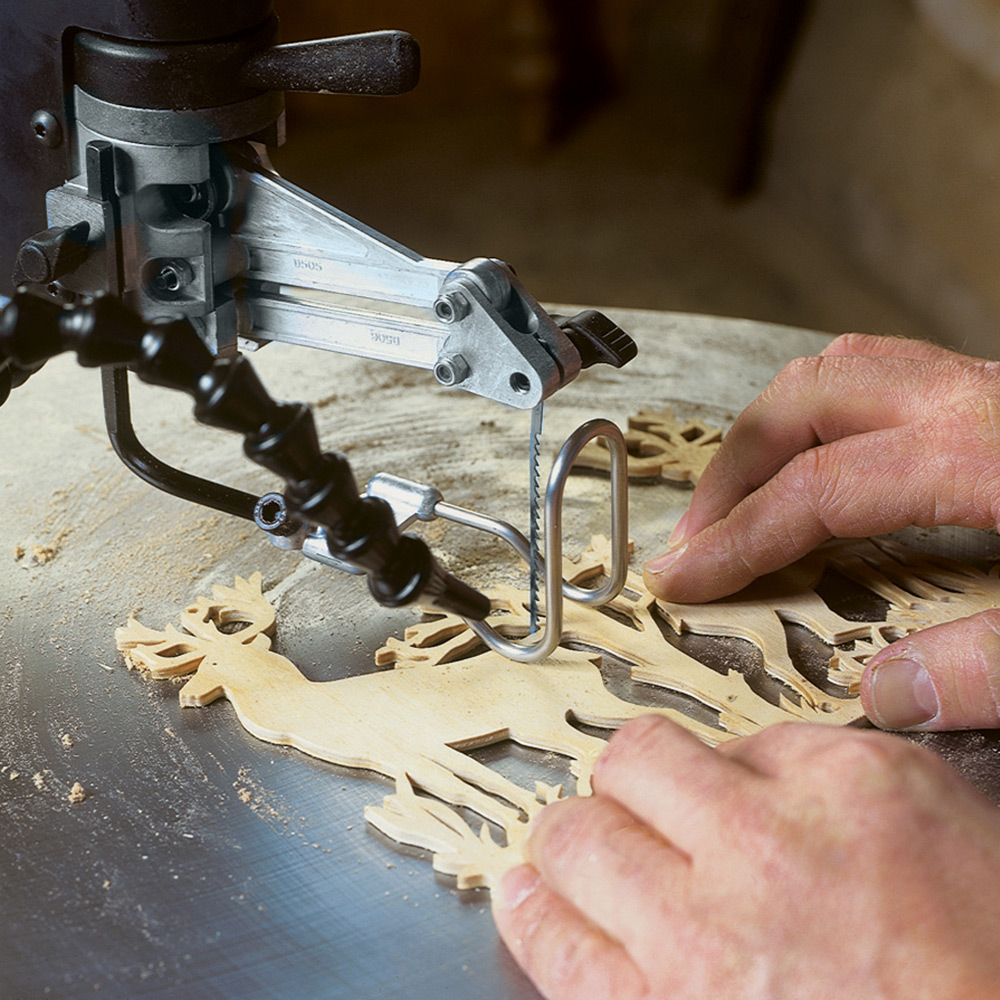
Image Source: contentgrid.homedepot-static.com
What a Scroll Saw Is and Its Main Purpose
A scroll saw is a stationary power tool. It looks like a small, electric jigsaw mounted on a stand or table. Its main job is precision cutting. Think of it as the perfect tool for detail work.
Hobbyists and woodworkers use it for many tasks. These include making decorative inlays, complex puzzles, and detailed fretwork. Its ability to make very small turns sets it apart from other saws. It excels at intricate cutting scroll saw projects.
The Basic Components of a Scroll Saw
To grasp how a scroll saw works, we must look at its main parts. Each piece plays a key role in the cutting action.
The Table and Hold-Down Foot
The table is where you rest your wood or material. It usually has a flat surface. Many tables tilt. This tilt lets you make angled cuts, often called bevels.
The hold-down foot is important. It presses down on the wood. This action keeps the material steady. It stops the wood from jumping when the blade moves fast. A steady piece of wood is key for smooth cuts.
The Arm and Blade System
The top and bottom arms hold the blade. The top arm moves up and down. The motor drives this movement. The blade fits between these two arms.
The blade is very thin. It looks like a small, thin file with teeth. These blades are what actually do the cutting.
The Motor and Drive Mechanism
The motor powers the whole system. It turns a mechanism that converts the motor’s rotation into the up-and-down motion of the blade. This is the heart of the blade movement scroll saw.
Deciphering the Scroll Saw Operation
The core action of a scroll saw involves rapid, vertical blade movement. Let’s break down the scroll saw operation step by step.
Step 1: Powering the Motion
When you turn the saw on, the electric motor starts spinning. This spinning motion needs to change direction quickly. It must go up, then down, then up, over and over.
Step 2: Converting Motion
A linkage system, often using a connecting rod and eccentric wheel, changes the rotary motion. It pushes the upper arm up and lets the lower arm pull the blade down. This creates the rapid up-and-down stroke.
Step 3: The Cutting Stroke
As the blade moves up, its teeth slice into the wood. The speed of this movement is crucial. Most saws operate at speeds ranging from 400 to 1,750 strokes per minute (SPM). Faster speeds work better for harder materials or thinner stock.
Step 4: The Return Stroke
When the blade moves down, it clears the cutting area. This clearance allows new wood dust to escape. It also prepares the blade for the next upward cut.
Blade Types and Their Role in Cutting
The blade choice directly affects the cut quality and speed. Scroll saw blades are very different from standard jigsaw blades. They are much thinner and often have teeth pointing in different directions.
| Blade Type | Typical Use | Characteristics |
|---|---|---|
| Spiral Blades | 360-degree cutting, carving | Cut in any direction; no need to reposition wood. |
| Reverse Skip Tooth | Woods, soft plastics | Teeth on the bottom point up. This reduces tear-out on the bottom surface. |
| Standard Tooth | Fast, general cuts | Teeth point only up for efficient material removal. |
| Double Tooth | Very smooth finishes | Small teeth above and below the blade for clean cuts on both sides. |
The thinness of the blade is what allows for extremely tight turns. This feature separates it from a standard woodcutting jigsaw comparison. A jigsaw blade is thicker and requires wider turning radii.
Making Inside Cuts: The Piercing Saw Function
One of the most amazing features of the scroll saw is its ability to cut shapes from the center of a piece of material. This is often called the piercing saw function.
To do this, you need to drill a small starter hole in the center of your design. Then, you follow these steps:
- Unplug the saw or turn it off completely. Safety first!
- Loosen the blade. You usually need to detach the blade from the lower arm clamp.
- Feed the blade through the small hole you drilled in the wood.
- Reattach and tension the blade to the lower arm.
- Reattach the top end of the blade to the upper arm clamp.
- Adjust the tension as needed.
- Start cutting your interior shape.
- When finished, stop the saw, unplug it, and release the blade to remove the inner piece.
This process requires precision and patience but makes complex designs possible.
Fathoming Scroll Saw Tensioning
Proper blade tension is vital for good performance. If the blade is too loose, it might wobble or even snap during the cut. If it is too tight, it puts extra strain on the motor and the blade itself, leading to premature breakage. Tensioning a scroll saw correctly is an art.
How to Check Tension
Most modern scroll saws have a tension indicator gauge. This gauge gives you a clear visual reference for the correct tension setting for a specific blade size.
If you do not have a gauge, use the “pluck” test:
- Gently pluck the middle of the installed blade, much like plucking a guitar string.
- A properly tensioned blade will produce a clear, high-pitched musical tone (a “twang”).
- A loose blade will make a dull, low “thud.”
- If the sound is very high and tight, the tension might be too high.
Always consult your saw’s manual. Different blades (thicker vs. thinner) require slightly different tension settings. Remember to release the tension when changing blades or storing the saw for long periods.
Understanding the Mechanics of Fret Saw vs. Scroll Saw
People often confuse a scroll saw with a fret saw mechanics tool. While both are used for fine, detailed cutting, they operate differently.
A fret saw is essentially a manual tool. It uses a thin blade held under high tension within a deep C-shaped frame (a bow). You provide the power through your arm movement. It is slower and requires more physical effort.
A scroll saw, conversely, is motorized. It uses the power of the electric motor for the rapid up-and-down stroke. This makes it much faster and less tiring for long cutting sessions. Both achieve fine detail, but the scroll saw provides superior speed and consistency for production work.
Key Features That Affect Performance
Several features on a scroll saw influence how it works and what it can cut.
Scroll Saw Throat Depth
Scroll saw throat depth refers to the distance from the center of the blade to the rear support arm of the saw frame. This measurement dictates the maximum size of the piece you can cut.
For example, if a saw has a 16-inch throat depth, you can cut a design that is up to 16 inches away from the edge of the material. If your design is centered on a 20-inch wide board, you can only cut the middle 16 inches comfortably. Larger throat depths allow for bigger projects.
Variable Speed Control
Most quality scroll saws feature variable speed control. This is usually a dial or lever. This control lets the user adjust the strokes per minute (SPM).
- High Speed: Good for soft woods (like pine) or plastics.
- Low Speed: Essential for hard woods (like maple or oak) or when working with brittle materials like glass or ceramic tile (with the correct blade). Low speed also helps prevent burning the wood.
The Dust Blower Scroll Saw System
Wood dust created during cutting can obscure your cutting line, making precise work difficult. This is where the dust blower scroll saw system comes in handy.
This feature uses a small tube or hose connected to an air pump. The pump directs a steady stream of air directly onto the cutting line, just ahead of the blade. This constant airflow blows the sawdust away, keeping your view clear. Some saws have a flexible nozzle so you can aim the air exactly where you need it.
Material Compatibility and Blade Selection
Scroll saws are versatile, but the material dictates the required setup.
| Material | Recommended Blade Style | Blade Teeth Per Inch (TPI) | Notes |
|---|---|---|---|
| Softwood (Pine) | Standard Tooth | 10 – 12 TPI | Faster cutting speed is usually fine. |
| Hardwood (Oak) | Reverse Skip Tooth | 15 – 18 TPI | Slower speed helps prevent burning. |
| Plywood | Double Tooth | 12 – 15 TPI | Helps minimize splintering on veneer layers. |
| Plastic/Acrylic | Fine Tooth, Metal Cutting | 18 TPI or higher | Use slow speed to prevent melting. |
When cutting very thick material, you need a blade with fewer teeth per inch (lower TPI). This allows more space for chips to clear out. For very thin material (veneer), use a high TPI blade for a smoother finish.
Maintenance for Longevity
A scroll saw is a relatively low-maintenance tool, but regular care ensures it keeps working well.
Cleaning
After every use, wipe down the table and the base. Remove any built-up pitch (resin from wood) using a mild solvent. Ensure the dust blower nozzle is clear of debris.
Lubrication
Check your saw’s manual for lubrication points. Many modern saws have sealed bearings and may not need regular greasing. If your model requires oiling, use the type specified by the manufacturer on the moving parts, like the lower arm pivot points. This keeps the blade movement scroll saw smooth.
Blade Storage
Never store the saw with the blade under high tension. Always loosen the tension until the blade is slightly slack. Storing it tight stretches the blade prematurely and strains the arm springs.
Scroll Saw vs. Jigsaw: A Quick Contrast
While both tools use reciprocating blades, their primary functions differ greatly, as noted in the woodcutting jigsaw comparison.
| Feature | Scroll Saw | Jigsaw |
|---|---|---|
| Mounting | Stationary (fixed table) | Portable (handheld) |
| Blade Action | Up and down only | Up and down, often with orbital action |
| Cut Detail | Excellent for intricate, tight curves | Good for curves, better for straight cuts |
| Capacity | Limited by throat depth | Limited by operator reach |
| Dust Control | Dedicated air blower is common | Often relies on user vacuum/clearance |
The scroll saw is the choice for detailed, stationary work. The jigsaw is better for rough cutting, breaking down large sheets, or making cuts on curved lines in place.
Setting Up Your Workspace for Scroll Saw Use
A scroll saw must be mounted securely. Because of the rapid vibration, a wobbly saw will produce poor cuts and stress the machine.
- Secure Mounting: Bolt the saw base firmly to a sturdy workbench or stand.
- Lighting: Good lighting is essential for seeing the cutting line, especially when working with dark wood. Supplement the built-in light (if present) with an adjustable task lamp.
- Dust Collection: Even with a dust blower scroll saw, connecting a shop vacuum to the saw’s dust port (if available) drastically improves air quality and visibility.
Advanced Techniques with the Scroll Saw
Once you master the basics, you can explore more complex applications enabled by the saw’s design.
Stacking Material
To save time, you can cut several thin layers of the same pattern at once. This is called stacking.
- Cut out the pattern on a piece of thin material (like cardboard or thin veneer) to use as a template.
- Place several layers of your main wood stock together.
- Secure the layers tightly with double-sided tape or small clamps designed for thin materials.
- Drill the blade entry hole through all layers simultaneously.
- Cut the pattern through the stack.
Caution: Stacked material must be perfectly aligned and clamped tightly to prevent shifting, which can cause blade breakage.
Relief Carving Preparation
Scroll saws are often used to rough out the basic shape before traditional relief carving begins. The saw removes large amounts of waste material quickly along the marked outline, leaving only the final shaping to chisels or rotary tools. This speeds up the entire artistic process.
Frequently Asked Questions (FAQ)
Q: Can I cut metal with a standard scroll saw blade?
A: No, you cannot cut metal with standard wood scroll saw blades. You need specialized blades designed for metal cutting, which are harder and have much finer teeth (higher TPI). Always use very slow speeds for metal.
Q: Why does my scroll saw blade keep breaking?
A: Blade breakage is usually caused by one of three things: the blade is overtensioned, you are forcing the material through too quickly, or you are attempting too sharp a turn for the blade size (too little scroll saw throat depth capacity used effectively).
Q: What is the minimum radius I can cut?
A: The minimum radius you can cut depends entirely on the blade width. The thinner the blade (lower gauge number), the tighter the turn you can make. Very fine blades can cut almost a zero-radius curve, though it takes much longer.
Q: Is a scroll saw loud?
A: Scroll saws are generally much quieter than table saws or band saws because they are only moving a small blade up and down. Noise levels are mostly related to the motor speed setting and the vibration transferred to the workbench.
Q: How thick of wood can a scroll saw handle?
A: Most hobbyist scroll saws can easily handle wood up to 1.5 inches thick. With very slow speeds and appropriate low-TPI blades, some professional models can cut up to 2 inches or more, though performance slows down significantly.