
Have you ever started a project with high hopes, only to have your circular saw stall, smoke, or leave a jagged, splintered mess behind? A dull or incorrect blade can turn a fun Saturday workshop session into a frustrating disaster in seconds. Many woodworkers spend hours researching, yet they still end up buying the wrong tool for the job. The sheer number of tooth counts, materials, and sizes available at the hardware store is enough to overwhelm even the most experienced DIY enthusiast.
Choosing the right circular saw blade does not have to be a guessing game. The secret to a perfect, professional-grade cut lies entirely in understanding how your blade interacts with your specific wood type. When you match the right tool to your task, your saw runs smoother, your cuts become cleaner, and your projects look like they came straight from a high-end furniture store.
In this guide, we will cut through the confusion. We will break down the differences between rip-cut and cross-cut blades, explain what those tiny teeth actually do, and help you identify the best option for your next build. By the end of this post, you will feel confident walking down the tool aisle and picking the perfect blade every single time. Let’s sharpen your skills and get your workshop ready for precision cutting.
Top Circular Saw Blade Recommendations

- Precision Tracking Cuts – Unique Tracking Point tooth design delivers straight, controlled cuts with up to 5X longer life in framing, plywood, and pressure-treated wood.
- Optimized for Cordless Tools – Ultra-efficient design provides up to 30% more cuts per battery charge, ideal for high-output use with cordless circular saws.
- Anti-Vibration Stability – Laser-cut stabilizer vents reduce vibration for smoother operation, improved accuracy, and reduced blade warping under load.
- Non-Stick Performance – Advanced coating resists heat, gumming, and corrosion, extending blade life and ensuring consistent cutting in tough materials.
- Durable Thin Kerf Design – Laser-cut .059" kerf and .040" plate reduce resistance while maintaining strength, allowing clean, fast cuts at up to 8,000 RPM.

- SPECIFICATION: Diameter: 7-1/4 inch circular saw blade(185 mm); Arbor size: 5/8 inch(15.88 mm) ; Max Rpm:8000; Carbide Teeth: 24 T 40 T 60 T
- DURABLE MATERIAL: Revvstark circular saw blades 7 1/4 inch are made of durable premium alloy steel material, with hardened and sharper construction-grade tungsten carbide teeth for high abrasion and heat resistance and resists bending and deflection for true cuts for effective woodworking
- EFFECTIVE CUTTING: Super thin laser cut kerf gives extremely fast, durable, and clean cuts, ensure fast and accurate cutting with impressive results; Carbide 24 T Framing, 40 T Crosscutting, 60 T Finish Circular Saw Blade for Wood Cutting; The higher degree of finish edge adopted brings higher cutting efficiency and effect, enabling the blades to rip cut along the grain
- QUIET & LONGER LIFE: Equipped with noise-reducing perforations helps minimize noise pollution and provide a more comfortable work environment; Our saw blades are engineered with thermal expansion grooves that promote better heat dissipation, offering longer service life and better cutting performance
- DESIGN FOR SAFETY AND SECURITY: The anti-kickback teeth design enhances safety and reduces the risk of injury, making Revvstark TCT circular saw blades an ideal choice for professional tool accessories

- SPECIFICATION: Diameter: 5-1/2 inch circular saw blade(140 mm); Arbor size: 10 mm; Max Rpm:8000; Carbide Teeth: 24T&48T
- DURABLE MATERIAL: Revvstark circular saw blades 5-1/2 inch are made of durable premium alloy steel material, with hardened and sharper construction-grade tungsten carbide teeth for high abrasion and heat resistance and resists bending and deflection for true cuts for effective woodworking
- EFFECTIVE CUTTING: Super thin laser cut kerf gives extremely fast, durable, and clean cuts, ensure fast and accurate cutting with impressive results; Carbide 24 T Framing, 48 T Finish Circular Saw Blade for Wood Cutting; The higher degree of finish edge adopted brings higher cutting efficiency and effect, enabling the blades to rip cut along the grain
- QUIET & LONGER LIFE: Equipped with noise-reducing perforations helps minimize noise pollution and provide a more comfortable work environment; Our saw blades are engineered with thermal expansion grooves that promote better heat dissipation, offering longer service life and better cutting performance
- DESIGN FOR SAFETY AND SECURITY: The anti-kickback teeth design enhances safety and reduces the risk of injury, making Revvstark TCT circular saw blades an ideal choice for professional tool accessories
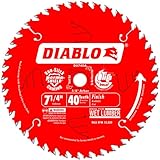
- Hardened Steel Body - Enhances the blade's longevity and maintains a sharp cutting edge, making it ideal for both rip and crosscuts in wood and plywood.
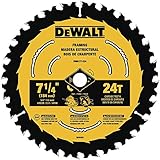
- Exclusive, patent-pending toughtrack tooth design for accurate tracking over the life of the blade
- Made from high-density tungsten Carbide for toughness, wear-resistance, and long life
- Tough coat anti-stick coating reduces friction and gumming
- Thin kerf design for smooth cuts
- Reinforced shoulder for impact resistance in nail-embedded wood

- MAINTAIN CUTS: Fully-hardened plate to help maintain true cuts
- PRECISION: Precision-ground teeth for smooth, accurate cuts
- EXTENDED LIFE: Heavy-gauge high carbon steel extend life
- ACCURATE CUTS: Fully flattened plate for fast, accurate cuts
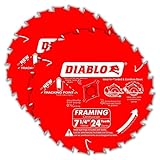
- Get the Job Done Faster - Diablo's Tracking Point technology delivers smooth, efficient cuts through wood, saving time and effort on framing and construction projects.
- Built for Tough Jobs - TiCo Hi-Density carbide ensures long-lasting durability, powering through heavy-duty materials without wearing out quickly.
- Stay in Control - Laser-cut stabilizer vents keep noise and vibration low, giving you precision and control for cleaner cuts.
- Keep Your Tools Running Smooth - Perma-SHIELD coating resists heat, gumming, and corrosion, ensuring reliable performance no matter the job conditions.
- Tackle Any Project - Designed to cut pressure-treated wood, 2x lumber, plywood, and hardwood, these blades are perfect for framers, roofers, and remodelers alike.
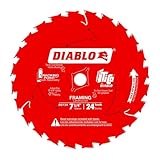
- Longer Life - Features a unique tooth design that ensures straight cuts and offers up to 5X longer cutting life compared to standard blades, keeping your tools running efficiently for longer.
- Enhanced Cutting - Designed for both corded and cordless saws, the Tracking Point tooth design delivers 30% more cuts per battery charge in cordless saws, making it perfect for extended work sessions.
- Coated Protection - Perma-SHIELD non-stick coating resists heat, gumming, and corrosion, while the laser-cut thin kerf minimizes resistance, offering greater cutting efficiency for a cleaner, faster result in both corded and cordless applications.
- Vibration Control - Newly enhanced anti-vibration design ensures the ideal combination of stability and rigidity, reducing vibrations and improving control for a smoother, more accurate cut.
- Versatile Use - Ideal for a range of tasks including framing, remodeling/demolition, siding/decking, masonry/concrete forming, and landscaping, providing reliable performance across a variety of general construction applications.
The Ultimate Guide to Choosing the Perfect Circular Saw Blade
Choosing the right circular saw blade changes how your project turns out. A good blade makes cutting wood fast and smooth. A bad blade can burn the wood or cause the saw to kick back. This guide will help you pick the best tool for your workshop.
1. Key Features to Look For
You must look at the tooth count first. Blades with fewer teeth, like 24 teeth, cut fast but leave rough edges. Blades with more teeth, like 60 or 80, make very smooth cuts. You also need to check the arbor size. This is the hole in the center of the blade. It must match your saw exactly.
2. Important Materials
Most modern blades use carbide tips. Carbide is a very hard metal. It stays sharp much longer than standard steel. If you cut wood with nails or old lumber, look for “nail-cutting” carbide blades. These resist chipping when they hit hard objects.
3. Factors That Affect Quality
- Blade Body: A high-quality blade has a flat, stiff body. If the metal is thin, it will wobble. Wobbling creates messy cuts.
- Expansion Slots: Look for thin slits on the edge of the blade. These prevent the metal from warping when it gets hot during long cuts.
- Coating: Some blades have a special coating. This coating prevents sap and glue from sticking to the blade. It helps the blade run cooler.
4. User Experience and Use Cases
Think about what you are cutting. Use a framing blade for rough work like building a deck. Use a finish blade for furniture or trim work. Always let the saw reach full speed before touching the wood. This simple habit keeps your cuts clean and protects the motor of your tool.
Frequently Asked Questions
Q: How do I know if my blade is dull?
A: If you have to push the saw hard to make a cut, the blade is dull. Also, look for black burn marks on the wood.
Q: Can I use a finish blade for framing?
A: You can, but it will take much longer. It also wears out the expensive finish blade very quickly.
Q: What does the “kerf” mean?
A: The kerf is the width of the cut. A thin-kerf blade removes less wood and is easier on your saw’s motor.
Q: Should I buy a diamond blade?
A: Only buy a diamond blade if you are cutting tile, stone, or concrete. They do not work on wood.
Q: How often should I change my blade?
A: Change it when you notice resistance or rough edges. Professionals often change blades after a few big projects.
Q: Can I sharpen a circular saw blade?
A: Carbide blades are hard to sharpen at home. It is usually cheaper and safer to buy a new one.
Q: Does blade size matter?
A: Yes. You must use the blade size recommended by your saw’s manufacturer. Never put a larger blade on a saw than it is rated for.
Q: Why does my saw smoke while cutting?
A: Smoke usually means the blade is dull or the wood is being pinched. Check your blade and make sure your work piece is supported correctly.
Q: What is a “hook angle”?
A: The hook angle is the tilt of the teeth. A high hook angle cuts fast, while a low hook angle is better for smooth, precise cuts.
Q: Is it safe to clean a blade?
A: Yes! You can use a bit of oven cleaner or a special blade wash to remove sticky pitch and sap. It makes an old blade feel new again.