
A kayak cart, often called a kayak dolly, helps you move your heavy kayak from your car to the water’s edge without straining your back. This guide will show you exactly how to use it safely and efficiently.
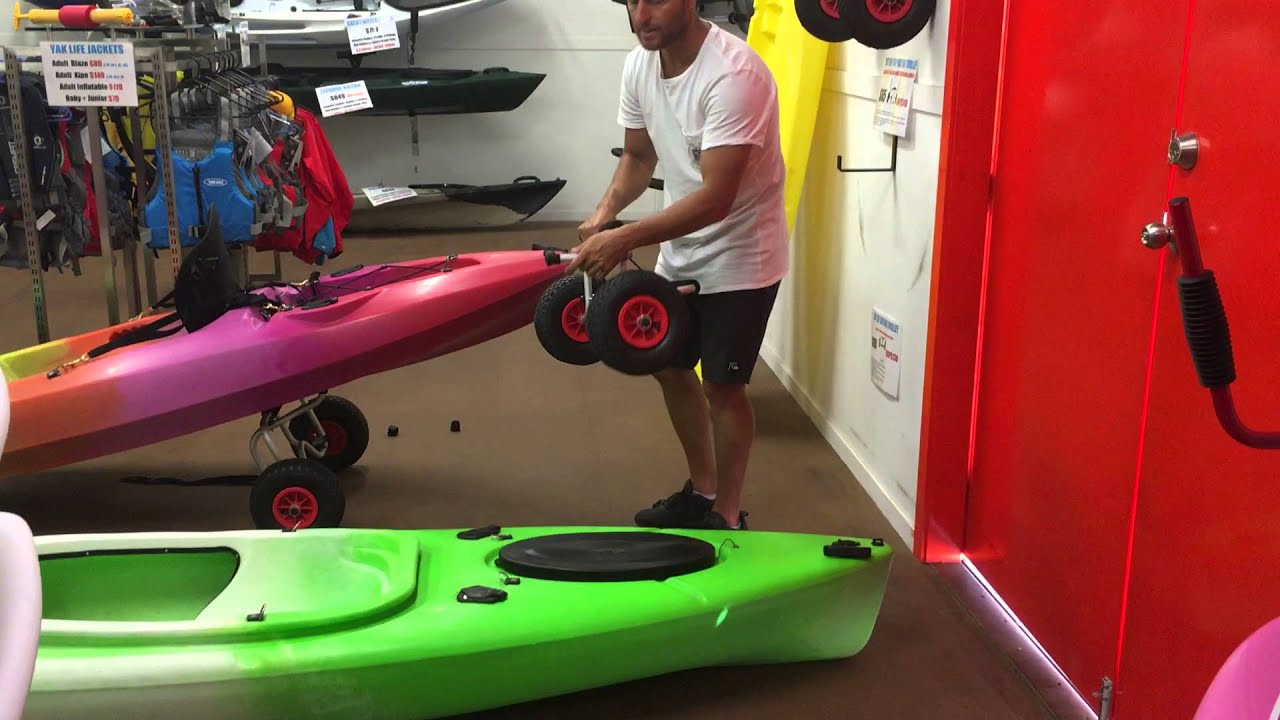
Image Source: i.ytimg.com
Setting Up Your Kayak Cart: From Box to Ready
Most kayak carts come in pieces when you buy them. Getting it ready for its first trip involves a few simple steps. Knowing the parts is the first step in successful kayak cart assembly.
Examining the Components
Before you start, lay out all the parts. A typical cart has a frame, wheels, and straps. Check the manual to make sure nothing is missing.
| Part Name | Main Function |
|---|---|
| Frame/Axle | Holds the kayak and connects the wheels. |
| Wheels | Allow the kayak to roll. |
| Support Arms/J-Bars | Hold the bottom of the kayak securely. |
| Straps/Bungees | Tie the kayak firmly to the cart. |
| Knob/Quick-Release Pin | Secures the wheels or folding mechanism. |
Simple Assembly Steps
Putting the cart together usually does not need special tools. Look for quick-release pins or twist knobs. These make taking it apart later easy too. This is key for efficient kayak cart folding when you are done.
- Attach the Wheels: Slide the wheel axles onto the main frame bars. Secure them using pins or nuts provided. Make sure the wheels spin freely.
- Set Up Support Arms: If your cart has adjustable arms, set them to the width of your kayak’s hull. These arms cradle the boat.
- Test the Folding Mechanism (If Applicable): If your model folds, practice folding and unfolding it once or twice. This prevents struggling at the ramp later.
If you are choosing a cart, think about the kayak cart wheel types. Hard plastic wheels are great for pavement. Large, air-filled (pneumatic) tires are better for soft ground like sand.
Placing Your Kayak on the Cart Correctly
The way you position the kayak on the cart matters a lot. Proper placement keeps your boat safe and makes pulling easier. Incorrect kayak dolly placement can cause damage or make the cart unstable.
Finding the Balance Point
Every kayak has a center of gravity, or balance point. This is where the boat rests best on the cart.
- Locate the Handles: If your kayak has carrying handles, the balance point is usually near them.
- Lift and Test: Lift the kayak gently from below. Find the spot where it feels lightest. Mark this spot with tape if you use the cart often.
Most kayak experts suggest placing the cart about one-third of the way back from the bow (front) or stern (back). For long sea kayaks, the middle section is often best. Knowing the best kayak cart for sea kayak models often involves looking at how well they handle longer, heavier boats.
Loading Techniques
You need a safe way to lift the kayak onto the cart arms.
- Cart Positioning: Place the cart near the kayak. Tilt the kayak slightly on one side.
- Lifting (Two-Person Method): If the kayak is heavy, have one person lift one end while the other slides the cart underneath the balance point.
- Solo Lift (For Lighter Boats): Lay the cart on its side. Lift one end of the kayak and slide the cart frame into place underneath. Then, gently set the boat down onto the cart arms.
Safety Check: Before moving, ensure the hull (bottom) rests evenly on both support arms. If it wobbles, adjust the placement slightly.
Securing the Kayak: The Importance of Strapping
A loose kayak will slide off the cart, perhaps into traffic or down a hill. Securing it tightly is vital for safe transport. This involves correct kayak cart strap adjustment.
Using Tie-Down Straps
Most carts come with two or more durable straps, often with cam buckles or strong Velcro.
- First Strap (Mid-Section): Wrap one strap over the center of the kayak, threading it under the cart frame or axle. Pull the strap tight using the buckle. The goal is to pull the boat down onto the frame, not just around it.
- Second Strap (Ends): Use the second strap near the bow or stern if the boat feels loose. This stops the kayak from rocking side to side.
Tip for Tightening: Pull the straps until the kayak feels solid against the frame. You should not be able to wiggle the boat much by hand. If you hear creaking, you might have overtightened a plastic hull, so ease up slightly.
Considering Weight Limits
It is important to know your cart’s limits. Check the manual for the kayak cart weight limit. Overloading the cart stresses the frame and wheels, leading to breakdowns. Always verify that your kayak’s weight is less than the cart’s stated capacity.
Moving Your Kayak: Pushing vs. Pulling
Once secured, you are ready to move! How you move the cart depends on the terrain.
On Paved Surfaces or Smooth Ground
When moving across pavement, boat ramps, or smooth park paths, pulling the cart is often easiest.
- Pulling Technique: Hold the bow handle or grab the kayak near the front. Pull the kayak behind you. This lets you see where you are going and avoid obstacles easily.
Dealing with Rough Terrain and Sand
Moving across soft ground requires more effort and often a different technique. This is where kayak cart on sand performance becomes important.
- Pushing Technique: For deep sand or steep grassy hills, pushing from the stern (back) can be better. This lets you use your body weight to drive the wheels forward.
- Sand Strategy: If you have wide, low-pressure tires (like beach wheels), you can roll across soft sand with moderate effort. If you have standard wheels, try to pull the cart where the sand is firmer, usually closer to the waterline.
Tip: Always walk slowly. Sudden jerks can throw the cart off balance, especially on bumpy ground.
Post-Trip Care: Cleaning and Storage
A little care after each trip keeps your cart working well for years. This relates directly to essential kayak cart maintenance.
Cleaning Procedures
Saltwater and mud are the enemies of metal and moving parts.
- Rinse Thoroughly: After every use near saltwater, rinse the entire cart—frame, axles, and wheels—with fresh water. This removes salt crystals that cause rust.
- Clean the Wheels: Check for trapped debris like small stones or weeds stuck around the axle or wheel hub. Remove anything found.
- Dry: Allow the cart to air dry completely before storing it, especially metal parts.
Essential Kayak Cart Maintenance
Regular checks prevent unexpected failures on the water’s edge.
- Check Bolts and Pins: Every few trips, check that all nuts, bolts, and quick-release pins are tight. Vibration from rolling can loosen them over time.
- Wheel Axle Lubrication: If your wheels squeak or feel stiff, apply a small amount of waterproof grease or silicone spray to the axles. This is a key part of good kayak cart maintenance.
- Inspect Straps: Look for cuts, tears, or fraying on your straps. Replace any strap that looks worn.
Smart Kayak Cart Storage Tips
Where you keep your cart matters, especially if you use it year-round. Good kayak cart storage tips focus on keeping it dry and out of the way.
- Indoor Storage is Best: If possible, store your cart inside a garage or shed. Extreme weather—hot sun or freezing cold—can degrade plastic wheels and rubber tires faster.
- Folding for Space: If your cart is designed for it, use the kayak cart folding feature. Folded carts take up much less room in a small shed or car trunk.
- Hanging Up: Many carts have holes or loops on the frame. Hanging the cart on a garage wall keeps it off the floor, protecting it from moisture and accidental kicks.
Choosing the Right Cart for Your Needs
Not all carts are the same. The type of water you paddle on and the size of your boat influence the best choice.
Comparing Wheel Types
The wheels are the most crucial component when dealing with different surfaces.
| Wheel Type | Best For | Pros | Cons |
|---|---|---|---|
| Pneumatic (Air-Filled) | Soft Sand, Gravel, Grass | Rolls easily over soft terrain, absorbs bumps. | Can puncture, require occasional inflation. |
| Solid Rubber/Foam | Pavement, Hard Trails | Never go flat, low maintenance. | Harder to pull through deep sand or mud. |
| Large Diameter Wheels | All Terrain | Better grip and rolling power. | Can make the cart bulkier for storage. |
If you primarily paddle ocean bays or lakes with sandy access points, researching the best kayak cart for sea kayak users will point you toward models with large, wide, low-pressure tires designed for sand.
Single Axle vs. Double Axle Carts
- Single Axle Carts: These are simpler, lighter, and usually easier to assemble and fold. They work well for shorter distances and lighter kayaks (under 60 lbs).
- Double Axle Carts (Two Sets of Wheels): These distribute heavy loads better. They are ideal for very heavy fishing kayaks or tandem boats. They are less likely to get stuck if one wheel sinks slightly.
Advanced Tips for Difficult Hauls
Sometimes the path to the water is not flat or short. Here is how to handle tough situations.
Navigating Steep Slopes
When going downhill, pulling the cart can cause it to slam into your legs.
- Control the Descent: Go slowly. Keep the cart in front of you, leaning back slightly to use your body weight to brake the cart’s momentum. Do not let it run ahead.
When going uphill, pushing is usually better, as noted before. Ensure your kayak cart strap adjustment is very tight so the boat does not slide backward off the frame as you lean into the hill.
Dealing with Very Heavy or Long Boats
If you have a tandem kayak or a specialized fishing kayak loaded with gear, remember the kayak cart weight limit.
- Use Padded Support: Add extra foam padding where the hull touches the cart arms. This prevents pressure dents in the plastic over long hauls.
- Distribute the Load: If the cart allows, place heavier items (like coolers) closer to the axle to keep the balance point centered over the wheels.
Final Checks Before Launching
Once you reach the water, you need to reverse the loading process quickly.
- Position at Water’s Edge: Roll the cart right up to the water line, or slightly into the shallow edge if safe.
- Unstrap: Undo all the securing straps.
- Remove the Kayak: Lift the kayak off the cart. It is often easiest to lift the bow first, slide the cart out from underneath, and then set the kayak down.
- Secure the Cart: Immediately fold your cart (if it folds) and secure it in your vehicle or place it nearby. Do not leave it unsecured near the water where waves or wind might move it. Remember those kayak cart storage tips even when taking a break!
Frequently Asked Questions (FAQ) About Kayak Carts
Can I leave my kayak cart attached to the kayak while paddling?
No, you should never paddle with the cart attached. The cart interferes with steering, creates massive drag, and can damage the cart frame or your boat hull when hitting waves. Always remove the cart completely before launching.
What is the typical lifespan of a kayak cart?
With proper kayak cart maintenance, a quality cart with metal parts can last 5 to 10 years or more. Plastic wheels and nylon straps may need replacing sooner, usually every 2 to 4 years, depending on usage frequency.
How do I stop my kayak cart from sinking in soft mud?
If your cart has standard wheels and you hit thick mud, the cart will likely bog down. To prevent this, invest in a cart upgrade with large, wide, low-pressure tires, often called “balloon wheels.” These are specifically designed to float on top of soft terrain.
Is a folding kayak cart worth the extra cost?
A kayak cart folding model is worth it if you have limited trunk or storage space. While they might cost slightly more, the convenience of having a compact unit after a long day of paddling is often highly valued by kayakers.
How often should I check the air pressure in pneumatic wheels?
If you use pneumatic (air-filled) wheels, check the pressure before every trip, especially if the cart has been stored for a while. Low pressure causes poor rolling performance, especially on sand. Refer to the wheel sidewall for the recommended PSI (Pounds per Square Inch).