
Table saw rip capacity defines the largest width of wood you can cut lengthwise (rip) in a single pass, measured from the saw blade to the fence. This number is vital because it sets the maximum lumber width for table saw operations you can perform without dangerous and difficult workarounds.
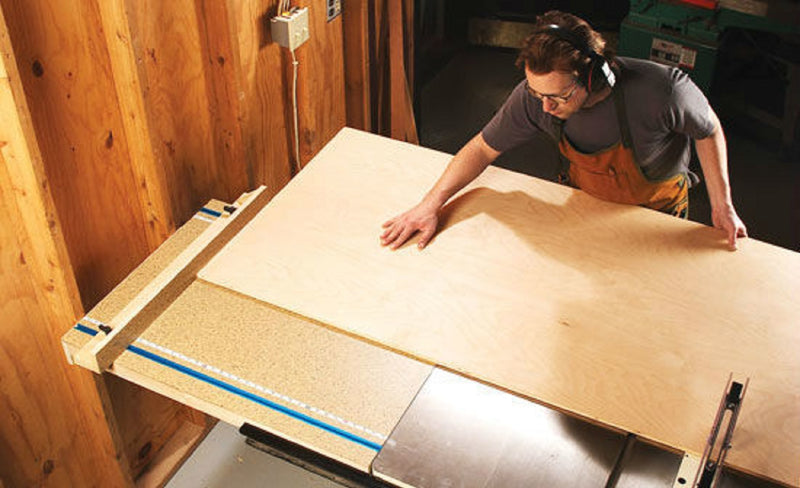
Image Source: landmarktools.com
Grasping the Core Concept: What is Rip Capacity?
Every woodworker needs to know their saw’s limits. Rip capacity is not just a number on a spec sheet; it directly controls what projects you can tackle. If you want to make wide shelves, cabinet sides, or large panel glue-ups, a high rip capacity is non-negotiable. It tells you the absolute limit for feeding wood through the saw parallel to the blade.
Defining the Components
To fully grasp this concept, we must look at the key parts that define this limit.
The Table Saw Rip Fence
The rip fence is the guiding rail that runs parallel to the blade. It is the most important part governing the cut width. How table saw rip fence works is simple: you set the fence a specific distance from the blade. This distance becomes your cut width. A sturdy, accurate fence is crucial for repeatable, safe cuts.
Blade to Fence Measurement
The official table saw maximum cut width is always the distance from the edge of the saw blade (at its highest point) to the face of the rip fence when the fence is locked in place at its furthest extent. This distance is what manufacturers list as the ripping capacity specifications.
Maximum Lumber Width for Table Saw
When you look at a piece of rough lumber, its width must be less than or equal to the table saw’s maximum rip capacity for you to process it safely and accurately in one go. Trying to rip wood wider than this limit forces unsafe methods.
Why Table Saw Rip Capacity Is Crucial for Your Workshop
Rip capacity is one of the top three factors—along with depth of cut and motor power—that determine a saw’s utility. Its importance stems from practical application in woodworking.
Project Scope Limitation
If your saw has a 24-inch capacity, you cannot easily rip a 30-inch wide cabinet door panel down to size. You would have to make multiple, dangerous passes, trying to keep the wood steady against the fence, often requiring helper hands or jigs. This increases the risk of kickback and leads to inaccurate sizing.
Efficiency and Speed
When the capacity matches or exceeds your common material width, workflow speeds up. You make one clean pass instead of two or three complicated ones. This saves time and reduces material waste from imperfect alignment in multiple passes.
Safety Concerns
The primary reason to respect rip capacity is safety. Pushing wood past the fence’s effective travel or trying to force wide material often involves removing or bypassing safety features. Determining table saw ripping limits correctly keeps you safe. When the wood extends past the end of the table or the fence travel, stability is lost, leading to potential binding near the back of the blade—a prime cause of dangerous kickback.
Factors Affecting Table Saw Rip Fence Travel
The advertised rip capacity is only possible if all parts of the fence system are functioning perfectly and the saw design allows for it. Several factors affecting table saw rip fence travel can limit the stated maximum.
Fence Design and Rail System
The quality and length of the rails supporting the fence are key.
- Bevel and Sliding Table Saws: Saws with external rails or sliding extensions often boast massive capacities (e.g., 50 inches or more). The strength of the rail dictates how far the fence can accurately travel and lock down without flexing.
- Cabinet Saws: These often have shorter, robust T-square style fences mounted directly to the table wings. Their capacity is usually lower (28 to 30 inches) but extremely rigid within that range.
Blade Guard and Throat Plate Interference
In some designs, especially on smaller jobsite saws, the maximum distance might be physically limited by where the blade guard assembly attaches to the table. If the fence bumps the guard housing before it reaches its mechanical limit, the effective capacity shrinks.
Outfeed Support Necessity
Even if the fence travels far enough, you must support the wood. For cuts near the maximum capacity, especially with long or heavy stock, the unsupported piece dropping off the infeed side or sagging on the outfeed side will throw off your cut accuracy. The practical limit is often dictated by how well you can support the workpiece, not just the fence distance.
Comparing Table Saw Rip Capacities Across Saw Types
Not all saws are created equal. Comparing table saw rip capacities reveals clear tiers based on the saw’s intended use and size.
| Saw Type | Typical Rip Capacity Range (Inches) | Primary Application |
|---|---|---|
| Jobsite/Benchtop Saws | 10 – 20 inches | Portability, small repairs, hobby work. |
| Contractor Saws | 24 – 30 inches | Serious DIY, light professional use. |
| Cabinet Saws | 30 – 36 inches | Professional shops, heavy-duty, consistent work. |
| Hybrid Saws | 24 – 32 inches | A mix of contractor and cabinet features. |
| Large Format Panel Saws | 48 – 100+ inches | Industrial panel processing. |
If your goal is to work with sheet goods (4×8 plywood) effectively, you need a saw that can handle at least 28 inches to safely rip down the width of the sheet into manageable strips.
Achieving Wider Cuts: Increasing Table Saw Rip Capacity
For woodworkers whose projects outgrow their current saw, the question becomes, “How do I maximize this?” Increasing table saw rip capacity usually involves modifications or adding external support systems.
Aftermarket Fence Systems
One of the best upgrades for any saw is a high-quality aftermarket fence system (like those offered by Biesemeyer or Delta T-Square equivalents). These fences are known for extreme accuracy and often feature longer rails than stock fences, directly translating to more usable rip capacity.
Bypassing the Stock Limit (With Caution)
If your saw is physically limited by the rail design but the motor and blade allow for wider cuts, you might be able to use a specialized outfeed table combined with a precision sliding jig system instead of relying solely on the built-in fence for the full width. However, this moves away from true “rip capacity” and into specialized jig work.
The Ultimate Solution: Buying a Better Saw
If you consistently need capacities over 36 inches, the most straightforward path involves upgrading to a professional cabinet saw or an industrial table saw. These are engineered from the ground up with heavy-duty rails and fencing systems designed for massive spans. They are the best table saw for wide boards because their entire structure supports the forces involved in handling large material.
Fathoming Table Saw Limitations and Safety
It is just as important to know the limits as it is to know the maximum rating. Understanding table saw limitations prevents accidents and frustration.
Depth of Cut vs. Rip Capacity
Do not confuse rip capacity with depth of cut. Rip capacity is horizontal travel; depth of cut is vertical clearance. A saw might have a 36-inch capacity but only cut 3 inches deep. You must evaluate both dimensions for your material needs.
Dealing with Curved or Warped Lumber
Rip capacity specifications assume you are feeding straight, flat, or dimensionally accurate lumber. If you are ripping rough-sawn lumber that has a severe curve or bow, the wood might bow away from the fence mid-cut, causing the fence alignment to become useless even if the initial setup was correct. In these cases, the effective capacity is much smaller than the rated capacity.
The Role of Power in Wide Rips
Ripping wide boards (close to the maximum capacity) requires significantly more motor power than thin cuts. If you try to force a 15-inch wide board through a 10-inch jobsite saw near its 20-inch limit, the motor will strain, overheat, and potentially trip the breaker or stall, risking kickback. Always check the motor amperage relative to the expected load.
Maintaining Rip Capacity Accuracy
A high rip capacity is useless if the fence drifts during the cut. Maintaining the fence system ensures you realize the full potential of your saw.
Fence Calibration Checks
Periodically check your fence alignment. A simple test involves drawing a line from the front edge of the blade to the fence, then checking the alignment at the back edge of the blade. They should match perfectly.
- Toe-In/Toe-Out: If the fence is “toed-in” (closer to the blade at the back), the wood will bind against the blade, leading to overheating and kickback potential.
- Flex: Lock the fence down tightly. Apply firm, steady pressure inward toward the blade at the front and back. If the fence moves easily, the locking mechanism needs adjustment or replacement. Flex ruins wide cuts.
Keep Rails Clean
Dust, pitch, and debris accumulating on the rails can interfere with the fence carriage, causing it to stick or shift slightly when locked. Keep the entire fence travel system clean.
Practical Examples in Woodworking Scenarios
Let’s see how rip capacity plays out in real-world shop scenarios.
Scenario 1: Building a Wide Dining Table Top
A standard 8-foot long dining table might require strips 10 inches wide glued together to reach a final width of 60 inches (5 strips x 10 inches + glue joints).
- Saw with 24-inch Capacity: You must make at least three passes per strip to reach 10 inches, assuming you can safely support the 12-inch starting width (plywood size). This is slow and error-prone.
- Saw with 36-inch Capacity (Cabinet Saw): You can rip the 12-inch width in one pass easily. This is vastly more efficient.
Scenario 2: Breaking Down Sheet Goods
A 4×8 sheet of plywood is 48 inches wide.
- If you need to cut this into two 24-inch wide panels, a saw with a 24-inch capacity works perfectly (if the fence travels exactly 24 inches).
- If you need three 16-inch strips, the 24-inch capacity works fine.
- If you need four 12-inch strips, the 24-inch capacity works fine.
If you try to rip the 48-inch width down the long way on a saw with only a 30-inch capacity, you are instantly limited to ripping only 30 inches of the board’s width before the rest hangs unsupported, making the cut virtually impossible to finish safely using the fence.
Technical Deep Dive: Deciphering Rip Fence Mechanics
The mechanism that allows for massive rip capacity on high-end saws involves advanced engineering to maintain parallelism over long distances.
T-Square vs. Biesemeyer Style Fences
T-Square Fences (Common on Cabinet Saws)
These fences use two rails (front and back) that slide through fixed brackets attached to the table wings. When the locking lever is thrown, it cams both brackets simultaneously, ensuring the fence remains perfectly parallel to the blade as it is locked down. This system is inherently rigid but limited by the physical length of the table wings.
Biesemeyer Style Fences (Popular Aftermarket Upgrade)
These often use a single, massive rail mounted at the front of the table, with a separate locking mechanism on the rear that slides along a track on the back edge of the table. The locking lever forces the fence assembly tightly against the front rail while simultaneously clamping the rear guide, offering superior rigidity over long travel distances compared to budget T-square systems.
Summary of Best Practices for Wide Ripping
To get the most out of your saw’s rated capacity, always follow these best practices.
- Measure Twice, Set Once: Always verify the distance between the blade and the fence with a high-quality tape measure or reliable caliper after locking the fence down.
- Ensure Infeed Support: For wide cuts, ensure the material entering the saw is flat and level with the table surface.
- Use Outfeed Support: For any cut where more than half the workpiece length extends past the blade, use rollers or an outfeed table to prevent sagging. Sagging material pulls the cut wide and risks kickback.
- Maintain Clearance: Never let the fence travel past its mechanical stops, even if the material requires it. If the material hangs off the end of the table beyond the fence’s functional support, switch to a different method (like a router table or track saw).
Frequently Asked Questions (FAQ)
Q: Does riving knife thickness affect the rip capacity measurement?
A: No. The official ripping capacity specifications are measured from the blade’s edge to the fence. The riving knife is located behind the blade and does not impact the initial setup distance. However, an overly thick or improperly mounted riving knife could potentially interfere with extremely wide stock during the exit of the cut, though this is rare if the fence is set correctly.
Q: Can I use a different fence system to get a larger capacity?
A: Yes. If you purchase an aftermarket fence system that utilizes longer rails than your saw originally came with, you can often extend your table saw maximum cut width. However, you must ensure the motor has the power to handle the wider boards that this new capacity allows you to cut.
Q: What is the difference between rip capacity and crosscut capacity?
A: Rip capacity is cutting parallel to the grain along the long edge of the wood, using the fence as the guide. Crosscut capacity refers to cutting across the width of the board, usually using a miter gauge or a sliding table/sled. Crosscut capacity is usually only limited by the size of the table wings or the travel of the sled/miter gauge, not the fence distance.
Q: If my saw has a 30-inch capacity, can I rip a 31-inch board?
A: Technically, no. You should never attempt to rip material wider than the rated capacity. Attempting to do so means the leading edge of the board will extend past the stability point of the fence system, making the cut unsafe and inaccurate. This is understanding table saw limitations in practice.
Q: Are portable jobsite saws good for wide boards?
A: Generally, no. While modern jobsite saws have improved significantly, their factors affecting table saw rip fence travel—such as lighter rails and smaller fence designs—mean they typically top out around 20 to 24 inches of capacity. They are designed for portability and moderate tasks, not consistent wide board processing.