
A back saw is a type of hand saw known for its stiffened top edge, which helps keep the blade straight during precise cuts. This woodworking hand tool is essential for fine joinery tasks where accuracy is paramount.
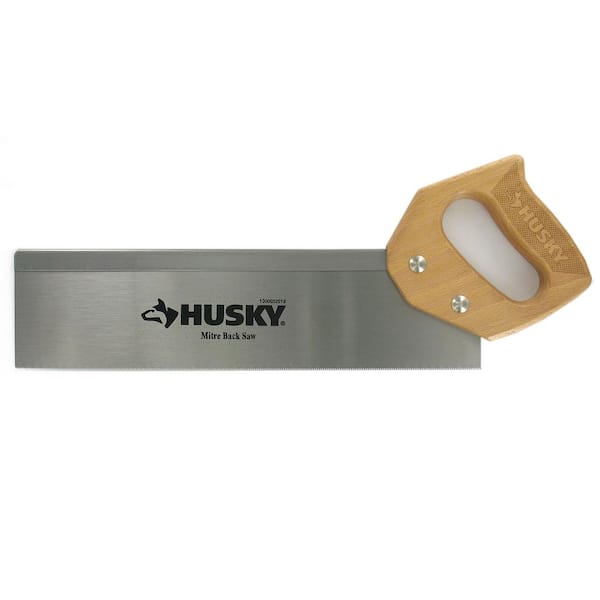
Image Source: images.thdstatic.com
Deciphering the Back Saw: A Core Woodworking Tool
The back saw family is crucial for any woodworker. These saws are designed for control, not for rough, fast removal of material like a large rip saw or crosscut saw. Their unique build makes them the go-to choice for delicate work.
Anatomy of a Back Saw
The defining feature of a back saw is its stiffener. This strip, usually brass or steel, runs along the top (the “back”) of the blade. This stiffening plate stops the thin blade from bending or flexing under pressure. This ensures a very straight cut, which is vital for making joints.
Backsaws Blade Characteristics
The blade itself is usually quite thin. This thinness reduces the amount of wood wasted during the cut, which is called the kerf.
- Tooth Configuration: Back saws usually have many small teeth. These saws are often fine-toothed saw designs. This means they cut on the push stroke and leave a very smooth surface finish.
- Set: The teeth usually have very little “set” (the slight bend outward of the teeth). Minimal set results in a narrow kerf and a cleaner cut edge, perfect for snug-fitting joints.
- Blade Length: Blades are generally shorter than other hand saws, often ranging from 6 to 15 inches. This shorter length makes the saw easier to manage in tight spaces, like inside a drawer box.
Handle Design and Ergonomics
The handle design greatly impacts how a woodworker uses the saw. Most back saws feature an open handle, often called a “pistol grip” handle.
- Grip: This handle style allows the user to position their hand high up. This position provides excellent control over the depth and angle of the cut.
- Material: Handles are typically made from hardwood like beech or sometimes durable plastic.
- Attachment: The handle is fixed firmly to the blade spine using brass screws or bolts. This firm connection is necessary for transferring power efficiently from the user to the blade.
Types of Back Saws
The term “back saw” is a category. Within this category are several specialized saws, each serving a specific joinery purpose.
The Tenon Saw
A tenon saw is perhaps the most common type of back saw. It is designed specifically for cutting tenons—the projecting parts of a joint that fit into a mortise (a corresponding hole or slot).
- Size: Tenon saws are medium-sized within the back saw family, usually having blades around 10 to 14 inches long.
- Teeth Count: They usually have teeth set for general-purpose cutting, often around 12 to 14 teeth per inch (TPI). They can handle both crosscuts and rip cuts reasonably well, making them versatile.
The Dovetail Saw
The dovetail saw is the smallest and finest of the back saws. It is engineered for the tiny, precise cuts required when creating dovetail joints, the hallmark of fine box making.
- Blade Size: These blades are short, often only 6 to 10 inches long.
- TPI: They have the highest tooth count, often 18 to 20 TPI or more. This extreme fineness ensures a perfectly smooth cut edge, crucial for the tightest possible fit in a dovetail joint. Because the teeth are so small, they cut very slowly but leave a superb finish.
Hybrid and Specialized Back Saws
While tenon and dovetail saws are the main types, other saws share the back saw construction:
- Coping Saw: While not strictly a back saw due to its tensioned, U-shaped frame, it shares the principle of a thin, stiffened blade for intricate work, often used for cutting curves or coping moulding joints.
- Gent’s Saw: This is often a smaller, more refined version of a tenon saw, sometimes with a slightly different handle style, aimed at delicate finish work.
| Saw Type | Typical Blade Length | Typical TPI | Primary Use |
|---|---|---|---|
| Dovetail Saw | 6″ – 10″ | 18 – 20+ TPI | Fine, small joinery (Dovetails) |
| Tenon Saw | 10″ – 14″ | 12 – 14 TPI | Cutting tenon shoulders and cheeks |
| Gent’s Saw | 8″ – 12″ | 15 – 18 TPI | Delicate general joinery |
Practical Back Saw Usage
Knowing how to use a back saw correctly is key to unlocking its precision. Unlike a standard crosscut saw meant for quickly cutting across wood grain, the back saw demands a more patient approach.
Setting Up for the Cut
Preparation dictates success when using any precise woodworking hand tool.
- Clamping: Always secure your workpiece firmly. A bench vise or sturdy clamps are necessary. The work must not move, even slightly, during the cut.
- Marking: Use a sharp marking knife or a very sharp pencil to scribe your cut lines. A knife line offers a physical “wall” for the saw teeth to ride against, preventing tear-out.
- Starting the Cut (Kerf Initiation): This is the most critical step. Do not try to force the saw.
- Place the saw blade gently on the waste side of your line.
- Use your thumb or forefinger as a guide near the teeth, keeping the blade exactly on the line.
- Start with very short, light strokes, using only the front portion of the blade. This establishes a shallow groove—the kerf.
The Cutting Motion
Once the groove is established, you can apply more pressure and lengthen your strokes.
- Push Stroke Dominance: Back saws, like most Western hand saws, do most of their cutting on the forward (push) stroke. Use smooth, steady movements. Avoid sawing too fast. Fast sawing generates heat and can dull the teeth quickly.
- Using the Full Blade: Try to use the full length of the blade for efficient cutting. This spreads the work over more teeth and reduces strain on any single area of the blade.
- Maintaining the Angle: If you are cutting a tenon cheek, maintain the required angle (often 90 degrees or sometimes slightly angled for draw-boring). If cutting dovetails, the required slope must be maintained throughout the stroke. Let the weight of the saw do the work; pushing too hard results in binding and bowing the thin blade.
Specialized Cuts
Back saw usage varies slightly depending on the task:
- Tenons: When cutting the shoulders of a tenon, ensure the saw stays perfectly perpendicular to the long face of the stock until you reach the cheek cut line.
- Dovetail Waste Removal: After sawing the angled lines of a dovetail, the waste piece is often chopped out. The fine teeth of the dovetail saw are then used gently to shave down the remaining waste right up to the knife line, producing a clean base for the joint.
Blade Dynamics: Teeth and Performance
The performance of any back saw hinges on its teeth. This is where the difference between a rip saw (which cuts with the grain) and a crosscut saw (which cuts across the grain) becomes very clear in the back saw design.
Tooth Geometry: Rip vs. Crosscut
Most traditional back saws have teeth filed for crosscutting, or are filed to be “combination” teeth, good at both.
- Crosscut Filing: The teeth are shaped like little knives. They slice across the wood fibers. This is the standard filing for most joinery cuts where you are cutting across the width of a board member.
- Rip Filing: The teeth are shaped like small chisels, designed to scrape wood fibers away along the length of the grain. While some larger tenon saws might be sharpened for ripping, the fine-toothed dovetail saws are almost always crosscut focused.
The Importance of Fine Teeth
Why use a fine-toothed saw?
- Reduced Tear-Out: Fewer, smaller teeth mean the saw cuts more smoothly. This is vital on brittle end grain, which tears out easily if cut aggressively.
- Less Material Removal: A finer saw removes less material per stroke, which means the saw glides more easily, requiring less overall force. This precision allows for very slight adjustments mid-cut if needed.
Tensioning the Blade
The stiff back strip is critical. If the blade is loose or removed from the spine, the saw becomes nearly useless for precision work because it will flex easily. The stiffness provided by the brass back ensures that the cutting action remains exactly on the line established by the user.
Maintenance and Sharpening a Back Saw
Back saws require regular maintenance to perform well. Because they are used for fine work, dull teeth are immediately noticeable as they cause burnishing or crushing instead of clean slicing.
Cleaning the Blade
Before sharpening, the blade must be clean.
- Rust Removal: Small amounts of rust can be removed with very fine steel wool (0000 grade) or specialized rust erasers. Use light oil as a lubricant during this process.
- Pitch and Resin: Wood resin (pitch) builds up on the teeth, clogging them and slowing the cut. Use turpentine or mineral spirits on a cloth to wipe the blade clean of all sticky residue.
Sharpening a Back Saw
Sharpening a back saw is a delicate skill, often requiring specialized tools due to the low TPI count.
Setting Up for Sharpening
The saw must be held firmly and correctly.
- Saw Horse or Vise: Clamp the saw horizontally in a vise, high enough so you can work comfortably without bending over too much. The back stiffener should be slightly above the jaw line of the vise.
- Filing Jig: Many experts use a filing jig or filing guide. This device holds the file at the exact correct rake and fleam angles required for the existing tooth geometry. Trying to freehand sharpen a fine-toothed saw is extremely difficult for a beginner.
The Filing Process
- Setting the Rake Angle: The rake angle determines how aggressive the tooth is. This angle is usually pre-set and should generally not be changed unless you are converting the saw from a rip to a crosscut pattern (which is rare for back saws).
- The Fleam Angle: This is the slight angle at which the tooth is angled side-to-side, creating the cutting edge.
- Filing Strokes: Use a triangular file that fits snugly into the gullets (the space between the teeth). File only on the push stroke. Lift the file on the return stroke to prevent dulling the freshly sharpened edge.
- Consistency: Work one tooth at a time. File each tooth until the entire face of the tooth shines brightly, indicating that the old, dull metal has been removed.
Set Adjustment
The “set” is the bend in the teeth that makes the kerf wider than the blade’s thickness. This prevents the blade from binding (sticking) in the wood.
- Checking Set: You need very little set on a back saw. Use a specialized tool called a saw set gauge or simply look closely. You want the teeth barely wider than the blade itself.
- Setting the Teeth: If the set is uneven or missing, use a saw set tool to gently tap the teeth outwards, one by one, ensuring they are set evenly on both sides. Too much set will cause a ragged cut and waste wood.
Comparing Back Saws to Other Saws
To appreciate the back saw, it helps to compare it to its cousins, the large frame saws.
Back Saw vs. Rip Saw and Crosscut Saw
The main difference lies in blade stiffness and tooth size/shape.
| Feature | Back Saw (Tenon/Dovetail) | Rip Saw / Large Crosscut Saw |
|---|---|---|
| Blade Support | Rigid spine (stiffener) | Full thickness blade |
| Blade Thickness | Very thin | Thicker |
| Tooth Count (TPI) | High (14 TPI and up) | Low (4–9 TPI) |
| Primary Function | Precision joinery, thin cuts | Dimensioning lumber, heavy removal |
| Cut Quality | Extremely smooth, clean | Rougher, faster removal |
A rip saw cuts with the grain (like chiseling), while a standard crosscut saw cuts across the grain (like slicing bread). Back saws are usually optimized for crosscutting the end grain, where precision matters most. If you try to rip a long board with a fine-toothed dovetail saw, it will take an exhausting amount of time due to the low aggressive cutting action.
Applications Beyond Joinery
While dovetails and tenons are the classic uses, the precision offered by a back saw makes it useful in several other areas of fine woodworking and craft.
Precision Layout and Cutting
Because you can see exactly where the teeth are going, the back saw is fantastic for detailed marking and cutting tasks outside of traditional furniture making.
- Veneer Work: Trimming thin veneers to size before gluing them down requires a razor-sharp, thin blade to avoid cracking the delicate material. A dovetail saw excels here.
- Laminate Cutting: When trimming high-pressure laminate or other composite materials that tend to chip, the fine teeth and controlled action of a back saw minimize edge damage.
Model Making and Instrument Building
In fields like musical instrument making (lutherie) or scale model building, tolerances are measured in fractions of a millimeter.
- Instrument Necks: Shaping intricate joints in guitar necks or fitting precise braces inside acoustic instruments often relies on the control offered by a tenon saw.
- Box Construction: For small, decorative boxes where all joints must be nearly invisible, the fine-toothed saw is indispensable.
Fathoming the Blade Material
Modern back saws often use high-quality steel, but historically, blade material varied significantly.
High Carbon Steel
Most quality modern blades are made from hardened and tempered high-carbon steel. This steel holds a very sharp edge longer than softer steels. Quality saws often have specialized hardening treatments that allow the thin blade to remain stiff without cracking.
Stainless Steel
Some newer, less expensive models might use stainless steel. While stainless steel resists rust better, it is often softer and may not hold an edge as well as quality high-carbon steel, meaning it requires more frequent sharpening.
Frequently Asked Questions (FAQ)
Q: Do I need both a tenon saw and a dovetail saw?
A: If you plan to do detailed joinery, yes, it is highly recommended. The dovetail saw is specialized for the smallest, tightest cuts (18+ TPI). The tenon saw is larger and slightly coarser (12-14 TPI), making it better for the larger tenon shoulders and cheeks. Using the large saw for tiny dovetails is clumsy, and using the tiny saw for large tenons is slow.
Q: Can I use a back saw for general cutting around the shop?
A: While you can, it is inefficient. Back saws are designed for precision, meaning they have high TPI counts. They cut slowly. For breaking down large pieces of lumber, use a larger rip saw or crosscut saw. Save the back saw for the detailed work where its stiffness and fine teeth provide a real advantage.
Q: Why is my back saw bending even with the back strip?
A: If the blade is bending during the cut, check two things: 1) Is the blade seated correctly and securely fastened to the spine/stiffener? 2) Are you pushing too hard? Back saws require finesse. Excessive force will cause any thin blade to deflect, regardless of the back support.
Q: How often should I check the sharpness of my back saw?
A: This depends heavily on usage and wood density. If you are cutting many pieces of hard, dense wood like oak or maple daily, you might need to check the edge every week or two. If you only use it occasionally on pine, it might hold its edge for months. A good rule of thumb: if you start feeling resistance or the cut starts looking fuzzy rather than sliced clean, it needs attention. Sharpening a back saw correctly is a skill worth learning.